Water/wastewater
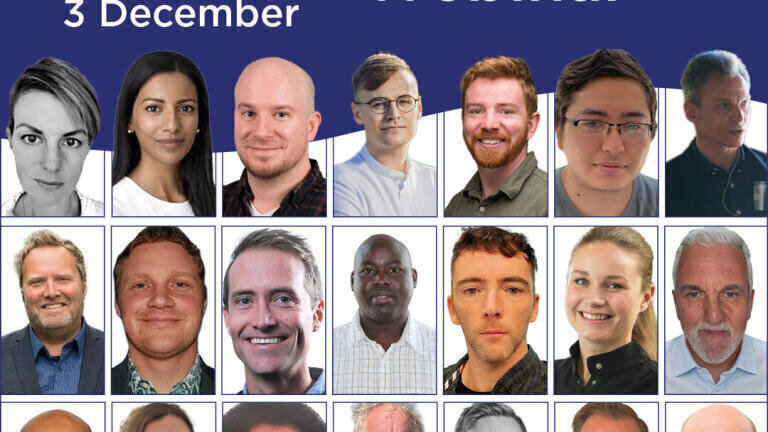
The third session of the SWIG (Sensors for Water Interest Group) Global Webinar 2025, titled “From Sensor to Insight,” presented the water industry at a fascinating crossroads.
Chaired by SWIG Director Mike Strahand, the session juxtaposed the rugged reality of deploying hardware in hostile environments against the intangible power of Artificial Intelligence (AI) to interpret vast oceans of data.
From the frozen peaks of Canada to the depths of the Southern Ocean, the message was clear; reliable monitoring requires a synthesis of robust engineering and advanced computation.
While data processing dominates headlines, data origination remains the fundamental hurdle.
Steve Elgie from Kisters presented a stark case study on hydrological monitoring in the Canadian Rockies.
Working with TransAlta, Kisters deployed the HyQuant, a non-contact radar discharge sensor, at the French Creek Diversion.
In a location where temperatures plunge to -50°C and glacial silt clogs traditional contact sensors, the radar technology provided reliable velocity and level data without putting field technicians at risk.
Moving from extreme cold to regulatory pressure, Travis from Halogen Systems highlighted a challenge in Lakewood, California.
A landlocked utility without lateral sewers faced a dilemma: traditional chlorine analysers generate chemical waste that must be treated, but they had nowhere to send it.
Halogen’s solution was the "Wet Tap" sensor - a solid-state, amperometric device with a built-in cleaning impeller.
The result? Two years of operation without a single calibration or waste stream. This saves the utility thousands in operational costs and non-revenue water.
As the session pivoted to software, the focus shifted to processing speed and democratisation.
Chris Dawson introduced Riverdeep Mountain AI, an Ofwat-funded project making machine learning models open-source.
By automating tasks like detecting slurry tanks from satellite imagery, the project allows regulators and utilities to identify high-risk assets across entire catchments instantly.
The power of AI to accelerate research was visibly demonstrated by Cameron Trotter of the British Antarctic Survey (BAS).
Monitoring benthic ecosystems in the Southern Ocean typically requires an expert eight hours to manually label a single seabed image.
Trotter’s computer vision workflow reduced this to just 30 seconds.
While human oversight is still needed to "fill in the blanks," this efficiency is transformative for monitoring climate change impacts.
Finally, Efrain from Pontificia Universidad Católica de Chile showcased high-resolution neural velocimetry.
This technique uses neural networks to calculate fluid movement purely from video footage, offering a potential future where drones could measure river discharge without ever touching the water.
The session concluded with a debate on the role of human expertise.
Mike Strahand analogised the shift to AI as moving from a 1977 VW Camper (mechanically transparent) to a modern Honda (reliant on diagnostics).
The panel agreed that while AI is an essential tool for handling massive datasets, we must ensure operators don't lose the intuitive "mechanic's" knowledge of their systems.
Ultimately, the future of water monitoring isn't about replacing sensors with software. Instead building "translators" that allow them to work in harmony.
IET Guide 2026

 Product directory










.jpg)