Water/wastewater
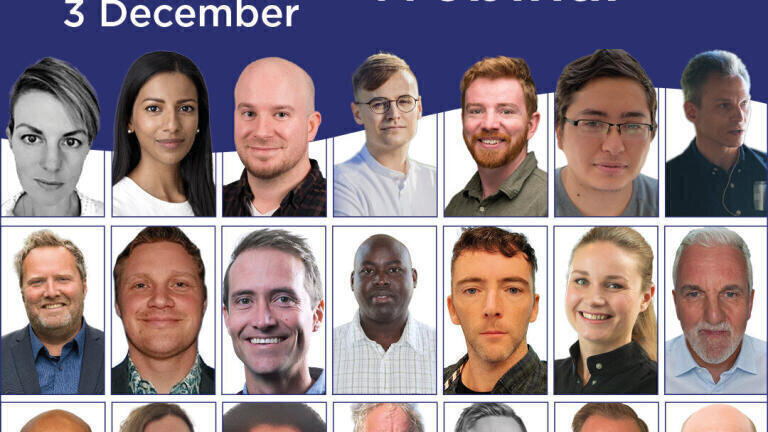
The opening session of the SWIG Global Webinar 2025, chaired by Sarah Brooks, focused on the dynamic Asia-Pacific region.
Titled “Collaboration in Action” the session highlighted a shift from simple data collection to complex, actionable intelligence, driven by the unique environmental pressures of the region.
Abhi Krutiafoi of AquaWatch (New Zealand) kicked off proceedings by challenging the industry's obsession with raw data.
He argued that a sensor’s job is merely to measure a state change; it doesn't know cause or consequence.
AquaWatch’s Swim OS moves beyond simple metrics to identify "multivariate signatures" - patterns where dissolved oxygen drops while conductivity rises - to distinguish between wastewater spills and stormwater runoff.
"Ecological risk is not about how often a pipe spills," Krutiafoi noted, "it's about the difference that spill makes to the river's ability to support life."
Two speakers addressed the urgent need for rapid pathogen and chemical detection.
Alex Rizos from Rizos Enterprises (New Zealand) introduced a handheld “microbiology tricorder.”
With 75% of New Zealand’s water suppliers struggling with compliance, this lab-free device uses optical methods and AI to identify pathogens in minutes rather than days, offering a lifeline for rural water safety.
Meanwhile, Dr Mark Sullivan from OIST (Japan) tackled the "forever chemical" crisis in Okinawa.
With high levels of PFAS linked to local military bases, Sullivan’s team is developing low-cost sensors using molecularly imprinted polymers.
These synthetic materials specifically "grab" PFAS molecules, blocking an electrochemical signal to provide a reading. This technology aims to bypass expensive mass spectrometry, empowering communities to monitor their own water safety.
Amanda Sequeira from Vapar (Australia) urged the industry to re-imagine CCTV not as a video record, but as a “passive sensor.”
Vapar uses AI to automatically extract structural and operational data from sewer inspection footage, identifying defects and inflow hotspots without the fatigue of manual review.
Complementing this was Sanjeeva Rajapaksa from the City of Melbourne. He detailed a smart stormwater network.
By deploying low-cost sensors at critical flooding hotspots and pump stations, the city can now detect blockages in real-time. They can then send crews to clear rubbish screens before the rain hits. Rather than cleaning up the flood afterwards.
Finally, Dr Shalini Tandon from NEERI (India) provided a sobering perspective on wastewater reuse.
Her research into using treated municipal wastewater for irrigation revealed that even when water meets WHO faecal coliform standards, it may still carry antibiotic resistant bacteria (ARB).
Her work underscores the need for updated global guidelines to prevent agricultural reuse from becoming a vector for superbugs.
Session 1 proved that whether through AI-driven asset management or novel polymer sensors, the Asia-Pacific region is at the forefront of translating environmental data into public health protection.
As Sarah Brooks summarised, the thread binding these diverse innovations is the necessity of collaboration to scale these solutions globally.
IET Guide 2026

 Product directory











.jpg)