Global Mercury Monitoring Requirements

Global Mercury Monitoring Requirements

Watch Now

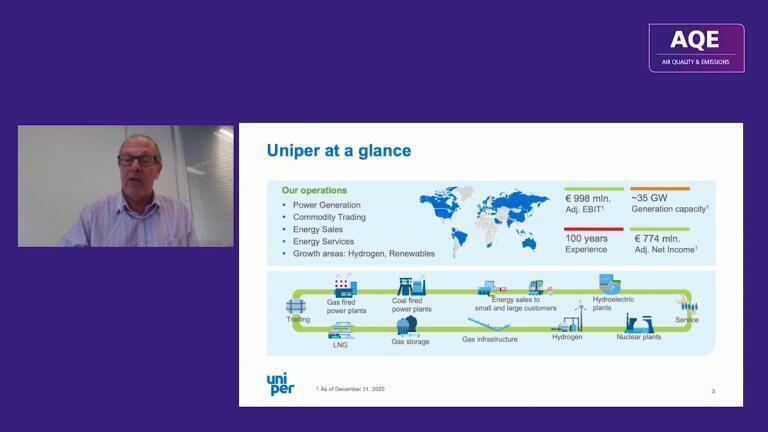
At our recent Air Quality and Emissions event, David Graham of Uniper gave a 30-minute presentation outlining current standards for the quality assurance of mercury around the globe.

Mr. Graham discusses:

  • The similarities and differences between quality assurance procedures in the United States and Europe
  • Type-testing requirements and measurement uncertainty
  • Alternatives to current conventions in performing linear calibration
  • The most effective methods for performing certification as required in the United States

More on the speakers

Author headshot

David Graham

Uniper

David Graham is a technical consultant with Uniper, working at their Technology Centre near Nottingham, England. He provides support to the United Kingdom's energy industry in relation to continuous emissions monitoring, emissions reporting and compliance issues. This includes the development of guidance for reporting under the Emissions Trading System.

More on the moderators

Author headshot

Dr. Lesley Sloss

International Centre for Sustainable Carbon

Dr. Lesley Sloss is very active in the outreach work of the International Centre for Sustainable Carbon and runs a workshop on mercury and multi-pollutant emissions from coal. Dr. Sloss acts as Lead on the United Nations Environment Programme's Coal Partnership Area providing guidance to the delegations on the implementation of the new Minamata Convention on Mercury.

IET 36.2 Mar/Apr 2026

Explore our Digital Edition

Discover the latest news and research

Digital edition

Explore Our Other Sites

Labmate Online
Compact chilling/heating dry bath for robotic workflows
Explore more Arrow
Pollution Solutions Online
Next-generation reverse osmosis membranes for more efficient and cost-effective seawater desalination
Explore more Arrow
Petro Online
Promotion strengthens engineering leadership team
Explore more Arrow
Chromatography Today
Chromatography and XFEL imaging reveal critical point behind water’s behaviour
Explore more Arrow