
Water quality monitoring
Published over 6 years ago. See the latest and most current information on Water quality monitoring.
Microbiological monitoring equipment pioneer LuminUltra has advised the shipping industry of the importance of testing all sizes of ballast water organisms identified by the International Maritime Organization (IMO) to prevent the spread of aquatic invasive species.
More than 4000 species of organism are carried in ballast water, ranging in size and resilience to treatment, with the IMO having specified the type and size of organisms that ballast water management systems (BWMS) are required to treat.
Known as the three fractions, these organisms are broken down into bacteria, organisms of between 10-50µm and organisms greater than 50µm. Regulation D2 of the Ballast Water Management Convention (and Circ.42/Rev1) requires all three sizes to be measured and assessed.
Organisms found in the 10-50µm bracket are typically phytoplankton and some micro-zooplankton, while organisms found in the >50µm range are typically zooplankton. Bacteria and phytoplankton are considered easier to treat, while zooplankton has proven more difficult. Monitoring only the 10-50µm fraction, therefore, should not be considered as the most suitable group from which to base compliance or system performance verification.
Carine Magdo, Business Development Manager for Ballast Water Monitoring Solutions, LuminUltra, said: “It is important that all three fractions and especially those greater than 50µm are considered when testing ballast water, as experience proves that if a system fails it is most likely in this category”
Indeed, zooplankton is the most difficult fraction to treat in order to achieve compliance with D2 discharge requirement. Blooms of zooplankton can also clog up BWTS filters. If filters fail, then this can pose a significant challenge to system performance during the approval process and later then in actual operation.
Meanwhile the presence of phytoplankton and bacteria, is generally seasonal and dependent on the region, so checking for these organisms alone is not a fair indicator of a BWMS’s efficacy.
Furthermore, the ecosystem in a ballast tank can change between ports, with the >50µm fraction potentially increasing and the 10-50µm fraction potentially decreasing. One of the reasons is because Zooplankton can survive in the ballast tank without light, whereas phytoplankton dies or is eaten.
Magdo said: “IMO has made remarkable progress in regulating ships’ ballast water. The Ballast Water Management Convention, still fairly new to the industry, continues to evolve as more technology and expertise is developed. A number of next steps have been identified, which LuminUltra is involved with, including verification of the indicative analysis instruments required to measure the different levels across the fractions.”
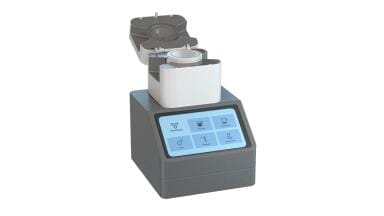
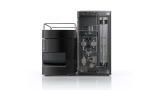
The company’s B-QUA ballast water monitoring system has been scientifically validated to measure ballast water readings across all three fractions.
LuminUltra now believes that greater emphasis should be placed on detecting and treating zooplankton in ballast water in efforts to minimise the spread of invasive aquatic species and all its consequences.
IET 36.5 Sept/Oct 2026



 Product directory






















.jpg)