Stack monitoring
Published over 13 years ago. See the latest and most current information on Stack monitoring.
A variety of primary and secondary legislation has been introduced to impose limits on industrial VOC emissions. In Europe two regulations are well established: 1. EN 12619 FID method for low concentrations of TOC. It is a standard reference method (SRM) for monitoring TOC from incinerators. It has been validated as suitable for measuring low level gaseous or vapour phase TOC emissions over a range of 0 - 20 mg/m3. 2. EN 13526 - FID method for high concentrations of TOC. it has a standard for higher concentrations of TOC found in emissions from processes which use solvents. The standard has been validated as suitable for measuring emissions up to 500 mg/m3.
VOCs are emitted by wide range of different industries. For example, emissions can arise through the evaporation of organic compounds used as solvents; through incomplete combustion of fuels; and through biological degradation of organic matter as in fermentation processes. Emissions also occur over a wide range of concentrations and emission limits are sector specific. For instance, stack emissions of solvents from coating processes can range between less than 20 mg/m3 up to several thousand g/m3.
If the stack gas is relatively hot and wet, there is a high probability of condensation when the gas sample touches a cold surface. A FID for stack monitoring should, therefore, be well done in order to prevent condensation of either moisture or VOCs in the sample line (i.e. be equipped with a heated-line and heated detector). Many simple, unheated, portable FIDs have been designed for applications in health and safety screening and fugitive emissions monitoring. These simple FIDs also usually have a wider spectrum of response factors, so their accuracy and precision will never be as great as the highly engineered, complex, heated FIDs.
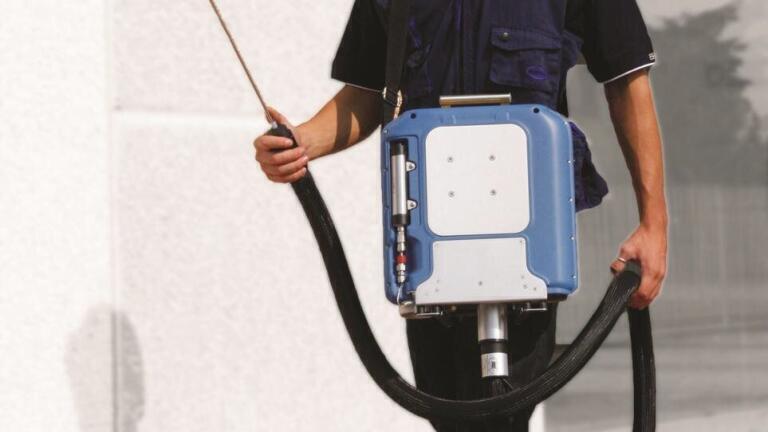
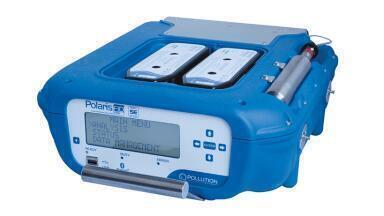
Pollution S.r.l's (Italy) Polaris FID is designed to be compliant with EN 12619:1999, EN 13526:2002 and US EPA Method 25A. These regulations impose that the temperature of the coolest point shall be at least 20°C above the flue gas temperature. Since the chimney’s fumes are very hot and they are above the ambient temperature, then the temperature of the sampling line and internal parts of Polaris FID are heated up to 180°C to prevent condensation and reduce adsorption losses.
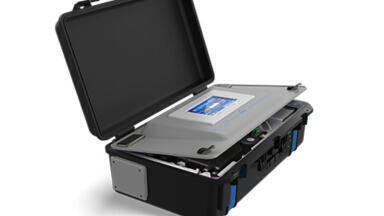
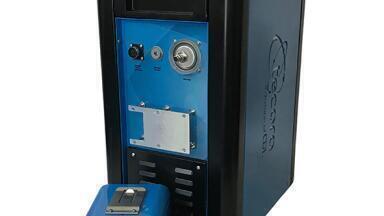
Polaris FID is a truly portable instrument and completely mounted analyser because in only 13 kilograms it incorporates inside all that is needed for the analysis: batteries, hydrogen storage accumulator, activated charcoal filter for the combustion air, span gas cylinder for the calibration and technical air cylinder for zeroing signal at every measurement. In addition, there is an input for external gas cylinders (H2, span gas, zero air) when continuous long time monitoring is required. The external optional docking station allows also methane/non-methane output configurations.
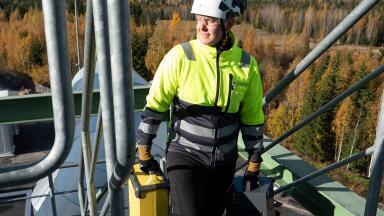
The integrated CPU automatically control several extra functions: flame injection, the menu-driven handling as well as a full auto testing for any failure. Another advantage of Polaris FID is described by the hydrogen cartridge. It doesn’t contain hydrogen at high pressure. Here the hydrogen is chemically bonded with a special metal alloy and it is slowly released assuring about 30 working hours. Even when the oxygen levels are unpredictable, Polaris FID well handles and minimises the effects of oxygen synergism. If you know how it’s hard to work upon the chimney, you can appreciate compact and lightweight instruments.
IET 36.5 Sept/Oct 2026




 Product directory















-corr.jpg)





.jpg)