Personal gas detector
Published over 4 years ago. See the latest and most current information on Personal gas detector.
Benzene is one of the most ubiquitous chemicals in industrial manufacturing. While benzene offers a variety of useful applications, for instance: in plastics, resins, rubbers and synthetic fibres, there are dangers associated with benzene that need to be addressed. Benzene needs to be monitored carefully and precisely to alleviate the dangers caused by exposure, so industry can enjoy the benefits of benzene, without risk.
ION Science, one of the world’s most reputable OEMs for PID (photoionisation detection) technology, VOC (volatile organic compound) gas analysis, and monitoring, are specialists in protecting people from exposure to benzene. ION Science are highly experienced at working with a wide range of industries that use benzene in their manufacturing processes and application, ION Science has a highly accomplished team who can advise, protect and manage benzene exposure in a multitude of situations.
The long-term health risks of prolonged benzene exposure can be very serious, causing conditions such as leukaemia, anaemia, respiratory difficulties and compromised immune system. The short-term effects include dizziness, rapid or irregular heartbeat, headaches, tremors, confusion, skin, eye, or lung irritation, and in high concentrations, benzene can prove fatal.
ION Science Benzene Webinar
Wednesday 3rd Nov.
15:00 (GMT) 10:00 (EST) 23:00 (JST)
In the environment, especially in soil and water, benzene can have a devastating impact. Benzene occurs naturally in extremely low levels resulting from volcanic activity. However, the main source of benzene presence in the environment, is caused by industrial accidents, improper disposal, leaks, spills, and leachate from landfill. When benzene enters soil or water, it breaks down very slowly and becomes a hazard to wildlife and human health caused by chemical build up.
When benzene is consumed, for instance through contaminated water, it can cause the above short-term effects, along with vomiting and digestive irritation.
Thankfully, as a common hydrocarbon used in a variety of industrial applications, there are a number of technologies available to detect and monitor benzene. VOC gas detection, supported by PID technology, is widely perceived as the most effective way to detect benzene in the environment. Detection at low levels, such as parts per million or parts per billion (ppm or ppb) is vital for ensuring that benzene can be removed to safe and legal levels established methods. ION Science has the instrumentation and expertise to help detect and monitor benzene in a wide number of industries, offering long-term protection of human health and the environment.
For benzene in soil, ION Science provide both in-situ and ex-situ solutions for cleaning and removing contaminants. The in-situ approach offers soil vapour extraction, whereby benzene vapours are removed from soil by aerobic or anaerobic biodegradation, leaving the soil intact whilst removing the benzene. Ex-situ is comparatively primitive and involves the removal of the contaminated soil by excavation. Soil vapour extraction is the most widely used method, but it comes with the risk of leaving behind traces levels of benzene that have been implanted into the environment through adsorption.
Danger from benzene exposure must be responded to efficiently and according to the highest standards of industrial hygiene. ION Science offers dependable and precise solutions for the detection and long-term monitoring of benzene.
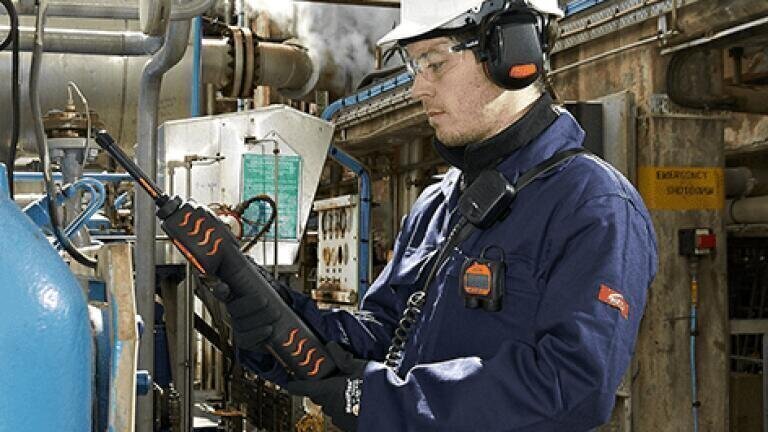
ION Science’s Tiger Select portable benzene gas detector features 15-minute short-term exposure limits as well as eight-hour time-weighted averages for total aromatic compounds (TACs). For personal protection, their Cub TAC 10.0 eV solution has been made specifically for benzene monitoring. When combined, the Tiger Select and Cub TAC offer unsurpassed protection against benzene exposure.
IET Guide 2026

 Product directory