Industrial emissions
Published over 11 years ago. See the latest and most current information on Industrial emissions.
Anthropogenic climate change, driven by greenhouse gas (GHG) emissions such as carbon dioxide and methane, is thought by many to be one of the major hazards to life on earth. Before anthropogenic climate change was fully recognised, other emissions were causing concern for atmospheric scientists. Chlorofluorocarbons (CFCs) were causing a hole in the ozone layer, while sulphur dioxide and nitrogen dioxide emissions from coal powered power stations in the UK were having devastating effects in the forests and lakes of Scandinavia as the emissions were converted to acid rain in the atmosphere. Changes in regulations, have helped to reduce the impacts of some of these emissions — but how can we be sure that the regulations are being adhered to?
One of the tools put into place by many regulatory authorities is a system where companies have to measure and report their emissions. Companies are set emissions limits that they must not breach and it is the individual company’s responsibility to ensure that any emissions they have are below the limit. They meet the limits in a variety of ways including:
The monitoring system that many regulatory authorities have put in place is known as Continuous Emissions Monitoring, or CEM. As the name suggests, companies have to monitor their emissions continuously, and report the emissions to the regulatory authorities. A thorough discussion on CEM can be found in this article: Improving Environmental Safety Through Responsible Monitoring. By using a standard framework it is possible to compare emissions between different countries and companies — the basis behind carbon trading.
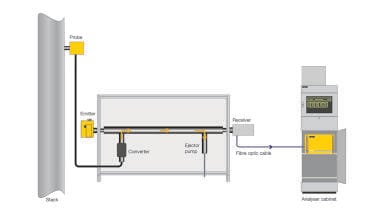
There are several simple stages to emissions monitoring that most systems follow.
By monitoring and actively working to reduce the emissions it is possible to reverse the damage done to our environment. In recent years, due to the removal of CFCs from our processes, the hole in the ozone layer has significantly been reduced. Greater understanding of what we put into the environment can help to preserve it.
IET Guide 2026

 Product directory
















.jpg)