Health & safety
Published over 12 years ago. See the latest and most current information on Health & safety.
In the United States, the practice of fracking has been credited with meeting an increased demand for energy, while reducing prices for consumers. But it’s certainly not all positive. In fact, fracking has come under fire for its negative impact in several areas; including the environment and human health. For workers directly involved in the fracking process, one substance - known as Crystalline Silica - is particularly hazardous.
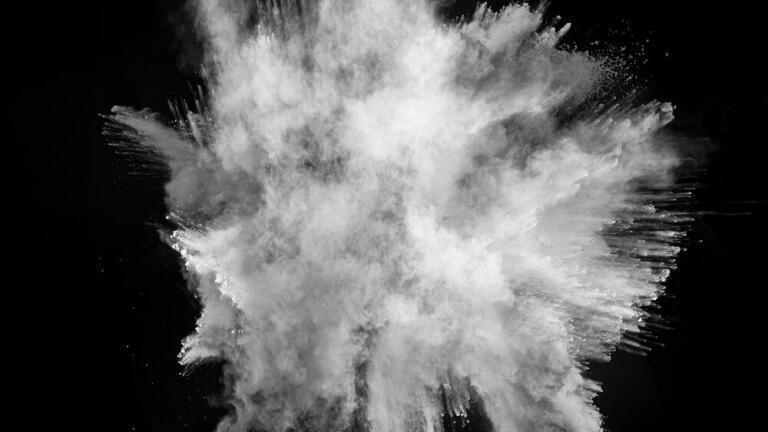
Crystalline Silica is a substance naturally found in soil, sand and other minerals. Its most common form is Quartz, although it is also found in the lesser known Cristobalite and Tridymite. During the fracking process Crystalline Silica is disrupted from the earth, becoming respirable via dust. When exposed to this dust, workers are at risk from significant health problems, which may even prove fatal.
Like many substance-related illnesses, the impact of Crystalline Silica is not always immediately apparent. Workers in the fracking industry may be unwittingly exposed to unsafe levels, perhaps not feeling the effects for years or even decades to come.
Crystalline Silica is a human lung carcinogen. It also causes an illness known as Silicosis, which can become evident in the short, medium or long term. Silicosos induces scarring on the lungs, which reduces their capacity to absorb oxygen. As well as inhibiting respiration, it also increases the risk of lung infections such as tuberculosis.
The most extreme strain, known as Acute Silicosis, can be felt very quickly - after just a few months or up to two years after exposure. Weakness, shortness of breath and weight loss usually results in death or disability - highlighting exactly how dangerous Crystalline Silica can be.
Accelerated Silicosis can affect individuals in the medium term, after around 5-10 years. The most common form, Chronic Silicosis, occurs 10-20 years following low or moderate exposure.
No matter how delayed the onset of illness, there is no ignoring the health hazards of Crystalline Silica. In the States, where the fracking industry is vast and ever-growing, the National Institute for Occupational Safety and Health (NIOSH) is responsible for monitoring the problem. In 2013, they reported that a staggering 1.7 million workers in the US were exposed to respirable Crystalline Silica each and every year. A worrying statistic to say the least!
During their research, NIOSH identified several ‘high risk’ jobs specific to the hydraulic fracking industry. Findings showed that sand mover and blender operators, as well of those working downwind of these operations, were subjected to high silica exposure. Education is key to prevention - via training, adapted equipment and risk-aware working process.
As for the future, the Occupational Safety & Health Administration (OSHA) has proposed regulations to limit worker exposure to Crystalline Silica. It is not yet a fracking industry standard, but it marks a step in the right direction. To read more about crystalline silica and how hazards can be reduced, read this article: Protecting Employee Health during Fracking.
IET 36.5 Sept/Oct 2026




 Product directory

















.jpg)










.jpg)