Health & safety
Published over 13 years ago. See the latest and most current information on Health & safety.
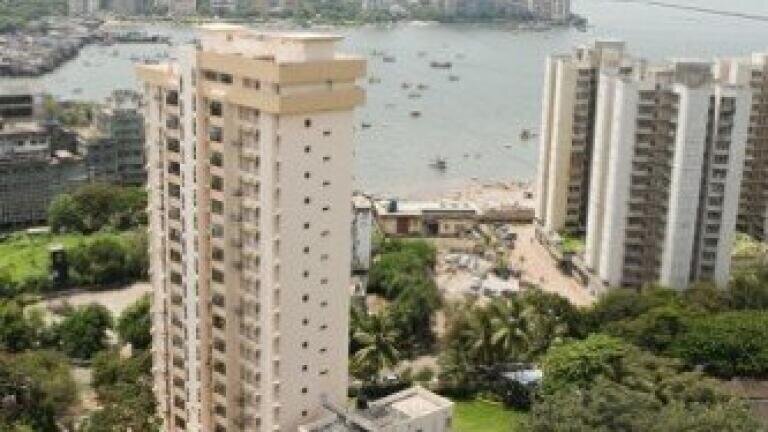
Mumbai has recently been covered by a heavy fog, owing to the high pollution levels in the city.
Indeed, official readings have indicated that pollution levels have doubled in the city this month, reaching the highest readings the city has ever seen.
Nitrogen oxide (NOx) and suspended particulate matter (SPM) are the particles that have recorded as particularly high during the past week.
In fact, on January 16th, SPM shot up to as high as 286 micrograms per cubic metre. On January 6, NOx was recorded at 211 micrograms per cubic metre.
"Anything above 100 micrograms of SPM and 80 micrograms of NOxin a cubic metre of air is bad for human health," said an MPCB official.
Certain parts of the city are thought to be worse than others, particularly areas that have a lot of traffic which can cause air pollution.
"Pollution norms for vehicles may be in place, but their sheer numbers in Mumbai override those and lend to the addition in SPM levels," said Dr Neelam Rane, professor of physiology at D Y Patil Medical College. "Vehicles emit more pollution when moving slow. In Mumbai, the problem gets amplified due to bumper-to-bumper traffic. Also, there is always some construction, renovation or restoration work happening, which is an even greater source of pollution," Dr Rane continued.
In addition, the weather is thought to be a contributer.
"When the weather gets cooler, SPM levels do tend to rise because of inversion," said Dr Rakesh Kumar of the National Environment Engineering Research Institute.
"At such a time, hot and cold air do not mix easily in the upper atmosphere. Because of this, pollutants get trapped in the lower atmosphere," explained Dr Kumar. "Strong winds break inversion and blow away pollutants."
Officials have written to the government to ask them to adopt measures that will prohibit such high levels of pollution.
IET 36.5 Sept/Oct 2026



 Product directory












.jpg)






.jpg)