Groundwater monitoring
Published over 14 years ago. See the latest and most current information on Groundwater monitoring.
Many chemical and biological reactions in groundwater depend directly or indirectly on the amount of available oxygen. Dissolved oxygen (DO) may be monitored in groundwater samples to examine the water quality. A change in DO value can indicate pollution by microbiological contaminants, organic matter or reduced mineral phases.
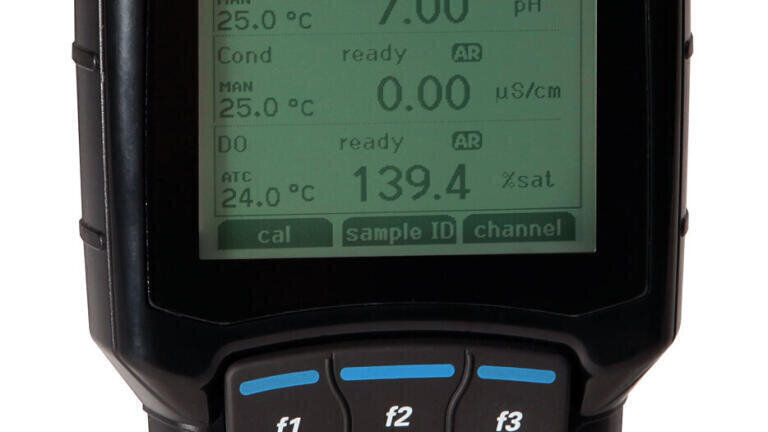
The Thermo Scientific Orion rugged dissolved oxygen (RDO) sensor can be used in the field to measure for oxygen content directly in the sample of interest. This sensor has shown similar readings to the polarographic sensor in groundwater samples taken from wells at depths of 10 to 30 ft and water temperatures from 13°C to 16°C in Cape Cod, Mass.
Many wells had low DO concentrations of less than 1 mg/L—concentrations that are typically challenging for polarographic DO probes; however, the sensor is quick to respond in low-level oxygen solutions.
In a solution with little or no oxygen, the Orion RDO sensor response is equivalent in speed to the polarographic DO probe, but it shows superior accuracy as it stabilises at zero. These measurements were made after a calibration in water-saturated air, indicating that a zero calibration point is not required for accurate low-level measurements with the sensor.
Technology Overview
The RDO sensor simplifies DO measurements. The RDO cap, with a lifetime of one year, replaces the membranes and electrolytes necessary for polarographic DO probes that require frequent maintenance. The sensor utilises luminescence technology to detect oxygen, in which the signal response is inversely related to the oxygen content, resulting in improved
accuracy in low-level samples.
The stainless steel sensor guard protects the RDO cap and provides weight to the sensor, allowing for measurements at any depth. The sensor does not consume oxygen, so sample stirring is unnecessary, and a calibration sleeve
is available, making in-situ field measurements easy and accurate.
IET 36.5 Sept/Oct 2026



 Product directory























.jpg)