Air monitoring
Published over 12 years ago. See the latest and most current information on Air monitoring.
A drive in China to improve air quality is likely to take a long time, leaving the health of its citizens at risk for longer.
The issue is that China is dependant on burning coal to provide power, with demand rising as the country's population continues to expand, and a number of climate experts say that the country needs to turn to other methods.
Among the measures that the Chinese government has rolled out to improve on air quality in the country is a limit on pollutants and more careful monitoring of this. As a result, the country needs to turn to other methods to provide power.
China's main solution to the issue is to use natural gas, with authorities insisting that only this type of power should be used for heating. However the country's reserves are not enough to meet the needs of its inhabitants.
The air pollution in China has been found to have negative ramifications to overall health, with northern parts of the country seeing life expectancy decreased by 5.5 years compared to southern areas as a result.
Recently a link was uncovered between air pollution and cancer. The World Health Organisation's (WHO) International Agency for Research on Cancer released data suggesting that 223,000 people had died from lung cancer worldwide as a result of poor air quality and suggested that this could also be a cause of bladder cancer.
WHO now class the particles produced by transport, power generation, heating and industrial and agricultural emissions as a Group 1 human carcinogen.
Recently the north-eastern city of Harbin was found to be 50 times over the WHO's recommended level of air pollution. Similarly, Beijing was found to be 45 times over the limit in January.
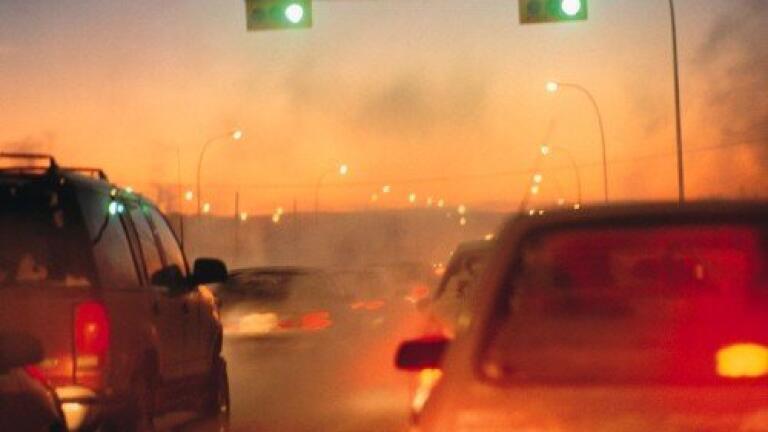
The capital city was again found to have reached severe pollution levels on October 28th, according to the Beijing Municipal Environmental Monitoring Centre. On this day, a yellow smog warning was issued and citizens were told to wear masks and avoid outdoor activities.
IET Guide 2026

 Product directory





















.jpg)