Air monitoring
Published over 13 years ago. See the latest and most current information on Air monitoring.
Globally, fine dust particles have been the focus of much greater attention in recent months as their role in deaths related to poor air quality becomes better understood. However, knowledge of the relationship between airborne particles and health effects is limited by the information that can be obtained by monitoring technologies.
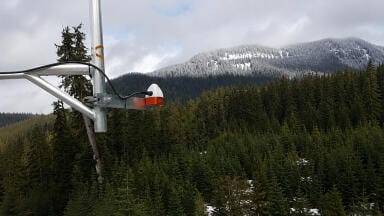
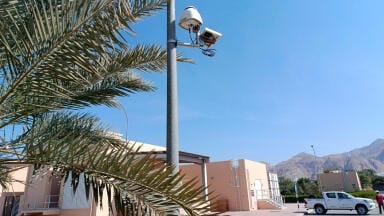
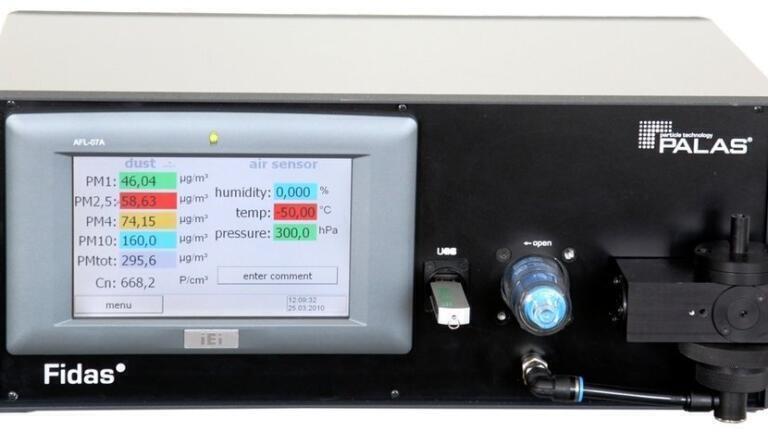
Jim Mills, a particulate monitoring specialist from Air Monitors Ltd (UK), believes that ambient dust monitoring technology has taken a major step forward with the development of a new Fine Dust Analysis System (FIDAS) which offers additional information on both particle size distribution from 0.18 – 30 microns and on particle number in each size range. It also provides continuous real-time simultaneous mass concentration measurements of TSP, PM1, PM2.5 and PM10. As such, Jim says “FIDAS will complement existing PM monitoring technology such as the TEOM FDMS, which is a standard method in many countries.”
The FIDAS instrument employs a white light LED light scatter method which will be particularly attractive to the managers of monitoring networks because it does not require consumables or mains power, and does not need to be housed in an air-conditioned housing.
IET Guide 2026

 Product directory



















.jpg)