Air monitoring
Published over 16 years ago. See the latest and most current information on Air monitoring.
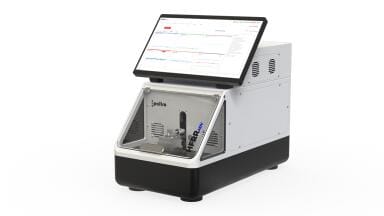
Agilent Technologies (USA) announced the availability of two Greenhouse Gases (GHG) Analyzers for simultaneous analysis of methane (CH4), carbon dioxide (CO2), and nitrous oxide (N2O) in air samples. The analyzers also can be used for soil gas analysis or plant breathing studies, where the samples contain CH4, N2O, and CO2. Both analyzers easily can be expanded to determine sulfur hexafluoride (SF6).
The core of the Agilent GHG Analysers is the advanced Agilent 7890A gas chromatograph. This analyser is configured with a multi-valve, micro-ECD, methanizer-FID combination, achieving simultaneous analysis of greenhouse gases in one injection. Results reflect high sensitivity and excellent repeatability. An easy-to-use union based on Agilent Capillary Flow Technology connects valves and the micro-ECD to improve chromatographic performance, including the peak shape.
“The analysers are configured and pre-tested in the factory, eliminating the need for tedious manual method development,” said Shanya Kane, Agilent vice president and general manager, Gas Chromatography Systems and Workflow Automation. “The analysers include a method of analysis and complete documentation, including a user manual, application notes, a CD-ROM containing the Agilent ChemStation method, and checkout results to allow for a fast and easy start-up.”
Carbon dioxide, methane, and nitrous oxide are referred to as the main greenhouse gases in the Earth’s atmosphere. These gases trap heat in the atmosphere and affect the temperature of the Earth. Continuous measurement of these gases provides meaningful information to track greenhouse gas emission trends and helps in the fight against climate change. Beginning on Jan. 1, 2010, the U.S. Environmental Protection Agency requires companies that are large emitters of heat-trapping emissions to begin collecting greenhouse gas data under a new reporting system.
IET 36.5 Sept/Oct 2026



 Product directory