Box 244, Furulund, 24402, Sweden

OPSIS is a global supplier of environmental monitoring systems for gas analysis and related services. OPSIS has provided thousands of systems both for ambient air quality monitoring (AQM), for continuous emissions monitoring (CEM), and for process control applications. The OPSIS systems are sold and serviced world-wide through a network of distributors and other representatives.
OPSIS’ first focus area was gas detection in ambient air using a novel open-path technology called DOAS. It soon evolved to use the same technology also in industrial applications such as emissions monitoring in power plants and for process control in production facilities. Other types of gaseous and particulate detectors as well as other application-specific sensors were also added to the product portfolio, resulting in today’s wide range of environmental monitoring equipment and related products and services.
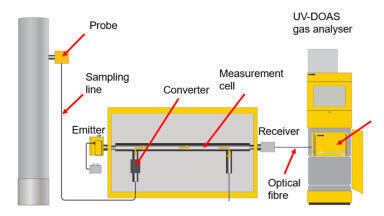
Presently, OPSIS has about half of its business in the AQM field, and half of it in the CEM/process control field. The central monitoring equipment is almost always a DOAS analyser, operating either in the ultraviolet (UV) or the infrared (IR) wavelength region. The analyser is combined with other types of sensors and communication solutions, resulting in a complete environmental monitoring system.
A typical OPSIS system for AQM consists of a UV DOAS gas analyser, a beta attenuation dust monitor and a set of meteorological sensors, monitoring local air quality. Multiple AQM systems are often combined in networks allowing full surveillance of the air in larger regions. The measurement results are usually forwarded to data management systems over the Internet. This allows for real-time presentation of air quality as well as statistical analysis and air quality studies that can help improve the quality of the air we breathe.
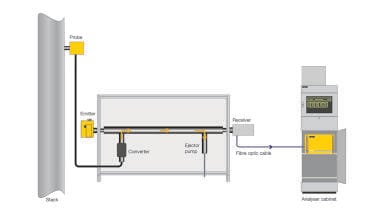
A typical CEM/process control system consists of one or two DOAS analysers (UV + FTIR for measurements of gas concentrations, in combination with other instruments providing e.g. flue gas flow rates and dust concentrations. The measurement results are often forwarded in real time to the process control system using any of the standard industrial communication protocols supported. From there, the results can be used for e.g. emissions monitoring and process optimization.
OPSIS provides both software-related services and services such as quality assurance and quality control (QA/QC), strategical advices, monitoring services, emission database (EDB) developments, dispersion modelling, and environmental impact assessment studies.
OPSIS’ environmental monitoring systems have been tested and approved by a number of internationally recognized institutes and authorities, such as U.S. EPA, German TÜV and British MCERTS.
OPSIS’ environmental monitoring systems are characterized by their reliability, durability and low maintenance costs; numerous references will vouch for this.
Through a network of subsidiary companies, distributors and other representatives, OPSIS is present on all continents.
OPSIS is certified according to the standards ISO 9001 quality, ISO 14001 environment, ISO 27001 information security, and ISO 45001 work environment. OPSIS also has an accredited laboratory according to ISO/IEC 17025.
Air Quality Monitoring Systems

Analysers (Ammonia Automated)
Analysers (Carbon Dioxide)
Analysers (Carbon Monoxide)
Analysers (Cyanide)
Analysers (Flue Gas)
Analysers (Fluoride)
Analysers (Formaldehyde)
Analysers (Hydrocarbon)
Analysers (Hydrogen Chloride)
Analysers (Hydrogen Fluoride)
Analysers (Hydrogen Sulphide)
Analysers (Infrared - IR)
Analysers (Mercury)
Analysers (Nitrogen Dioxide)
Analysers (Nitrogen Oxide)
Analysers (Oxygen)
Analysers (Ozone)
Analysers (Phenol)
Analysers (Sulphur Dioxide)
Analysers (Total Mercury)
Analysers (Toxic Gases)
Analysers (Volatile Organic)
Continuous Emission Monitoring Systems
Data Acquisition & Processing Equipment
Data Loggers
Data Loggers (Multi-channel)
Dilution Probes
Dioxin Analysis
Dust Analysis (Airborne)
Dust Collection
Dust Sampling Equipment
Monitoring (In Stack)
Monitoring (Pollution Emission)
Monitors (Air Pollution)
Monitors (Dust)
Monitors (Gas)
Monitors (Stack Emission)
Monitors (Temperature)
Open Path Multicomponent Analysers
Software (Air Quality Management)
Software (Data Acquisition)
Software (Emissions Monitoring)
Software (Environmental Management)
IET Guide 2026

 Product directory