Air quality monitoring
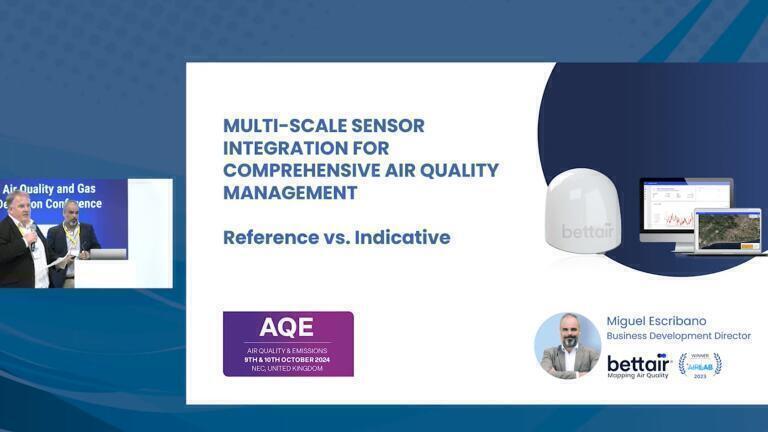
Environmental monitoring is undergoing a transformation, driven by AI, IoT, and cutting-edge sensor technology. In a recent lecture, Miguel from Bettair explores how these innovations are shaping the future of air quality measurement and regulatory compliance.
As new European standards push for improved environmental assessments, monitoring systems must balance accuracy, affordability, and scalability.
Miguel delves into hybrid networks and multi-scale monitoring, explaining how indicative measurement technologies bridge the gap between traditional monitoring stations and predictive modelling.
A key focus of the lecture is the growing role of sensor-based technology in delivering cost-effective and real-time environmental data.
With AI-driven calibration and machine learning, these systems can enhance accuracy without frequent recalibrations, reducing operational costs and maintenance efforts.
Miguel also highlights the impact of European Directive updates, which now recommend combining modelling and indicative sensor measurements to improve air quality assessments.
He provides real-world case studies, demonstrating how industry leaders are adopting next-generation monitoring solutions to comply with evolving regulations.
The lecture further examines the challenges of maintaining data quality over time, addressing concerns about sensor lifespan, calibration, and long-term reliability.
Through award-winning innovations and international validation, Bettair’s approach is setting a new benchmark for environmental monitoring solutions.
This lecture is essential viewing for environmental professionals, regulatory bodies, and technology innovators looking to stay ahead in the evolving landscape of air quality monitoring and compliance.
Register for free to watch the full lecture and explore the future of environmental monitoring.
IET Guide 2026

.jpg)

 Product directory




.jpg)







.jpg)
.jpg)
.jpg)
.jpg)