Water/wastewater
Published over 7 years ago. See the latest and most current information on Water/wastewater.
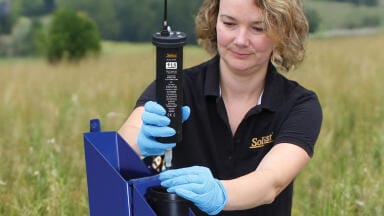
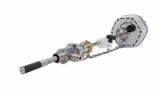
In-Situ has released a new line of fluorometers compatible with the company’s popular Aqua TROLL 500 and Aqua TROLL 600 Multiparameter Sondes. The line includes Rhodamine WT, Chlorophyll a, Phycocyanin (BGA-PC), and Phycoerythrin (BGA-PE) sensors, ideal for lake and river monitoring as well as coastal studies.
Representing a significant technological advance, In-Situ’s fluorometers are the only sensors in the multiparameter water quality market with integrated optical compensation. In-Situ’s patented technology uses a second detector to compensate for LED drift over temperature and time, providing more accurate and stable measurements.
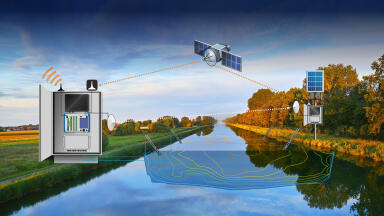
The sensors are the latest addition to the company’s multiparameter water quality platform, which allows for wireless data collection via the VuSitu mobile app. The company is excited to introduce an expanded set of sensors for users looking to streamline fieldwork and reduce monitoring costs.
“With our patented Integrated optical compensation technology, our sensors provide greater stability at low limits of detection and have significantly reduced sensor drift over temperature and time,” says Product Manager Steven Sewell. “This allows you to be confident that changes in your data are tied to real field events and are not caused by sensor drift.”
The new fluorometers also feature isolated optical frequencies. Using two or more sensors simultaneously typically creates interference among sensors, In-Situ sensors use separate frequencies, providing a unique digital signature for each light source to minimize interference and improve accuracy. Another advantage offered by these new instruments isambient light rejection. External light can introduce bias in your data, but In-Situ fluorometers block external light for reliable performance in any setting and separate the light from the sensor and other ambient light sources. Accuracy is further enhanced by the low interference spectral bands. Unlike combined Chlorophyll/BGA sensors that measure wide ranges of the visible spectrum at once, In-Situ sensors excite a smaller, targeted range of the light spectrum, which increases accuracy and minimises interference.
IET Guide 2026

 Product directory