Stack monitoring
Published over 10 years ago. See the latest and most current information on Stack monitoring.
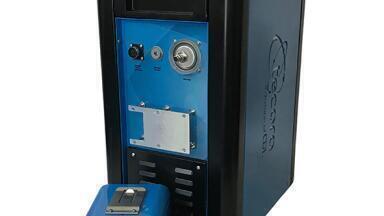
Environnement S.A (France) introduces the state-of-the-art laser based analysers to cover number of applications for CEMS regulatory as well as process control such as: Coal Fired Boiler HCl Measurement on Dry FGD Scrubber Stack, Brick manufacturer HCL Stack Measurement, Incinerator HCl Measurement, Aluminium Smelter HF Measurement, Coal Fired Boiler SNCR NH3 Measurement, Cement plant HCl monitoring...
Exists in 4 different versions to meet your analytical requirements: LAS 300XD HF for Hydrofluoric acid (HF) and water (H2O) monitoring, LAS 300XD HCl for hydrochloric acid (HCl) and water (H2O) monitoring, LAS 300XD NH3 for ammonia (NH3) and water (H2O) monitoring, and LAS 300XD O2 for Oxygen monitoring.
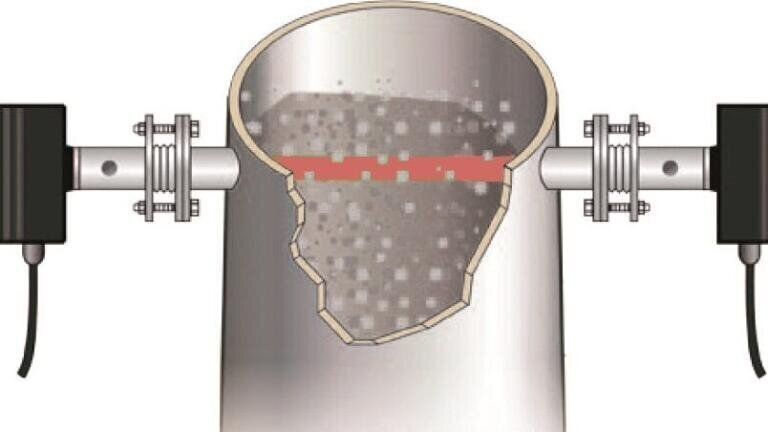
The gas monitor LAS 300XD uses TDL and the Direct Absorption spectroscopy technology, an innovative alternative to the wavelength modulated method. This innovation allows for better accuracy and response time. It is also a non-contact optical technology and therefore the emitter (laser source) as the sensor stays protected from any contamination or corrosion and so the maintenance operation and the cost of operation are very low compared to other technologies.
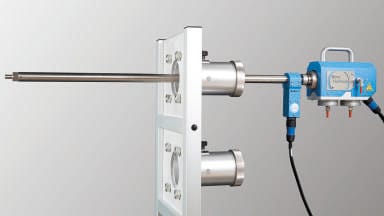
The LAS300XD is the simplest instrument and is likely to be the most reliable. The two main parts the instruments are arranged on opposite sides of the duct. On one side is the transmitter. This contains the laser and, typically, the signal processing and communication electronics. On the opposite side is the receiver which contains a photo-detector and power and signals are connected to the transmitter unit. This requires electrical cabling to be secured from one unit to the other.
Benefits: High sensitivity (ppb, ppm concentrations), interference free gas measurements, large dynamic range, absolute measurements: no drift, no calibration, inherently linear, real-time (1 second response), in-situ and non-invasive (optical technique), suitable for harsh environments; sensor unaffected by contaminants (no corrosion), absence of extractive conditioning: eliminates errors related to sample handling, and very low maintenance, low cost of ownership.
IET Guide 2026

 Product directory

















-corr.jpg)