Sewage monitoring
Published over 13 years ago. See the latest and most current information on Sewage monitoring.
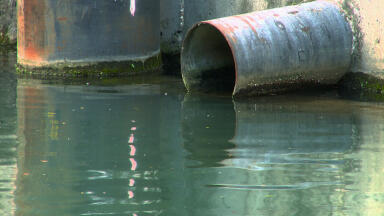
A new state report has found that of the wastewater created by the settlements of Judea and Samaria, 13 per cent flows into insecure outdoor cesspits or directly into the ground as raw sewage. It has also been found, by the Water Authority, that of the raw sewage generated by Palestinian towns and villages 96 per cent is released directly into the environment.
The new Survey of Sewage Collection and Treatment Facilities in Israeli Population in Judea and Samaria in 2012, is aiming to reduce pollution in the environment from contaminants by finding suitable, advanced ways to deal with sewage and wastewater. The report was co-sponsored by the civil administration and the Environmental Protection Ministry and conducted by the hydrological research and surveys arm of the Israel Nature and Park's Authority's environmental unit.
The report also found that around 28 per cent of settlers' sewage is being directed to defunct processing plants or plants that are not in full working condition. Only 54 of the sewage treatment plants are fully operational and they are only dealing with sewage created by 71 per cent of the 352,170 settlers in the region. The remaining sewage - generated by around 249,635 settlers - is transported to another 39 processing plants, of which 20 are totally defunct and 19 are not entirely functional.
Around 13 per cent of the estimated 17.1 million cubic metres of wastewater produced by the Israeli population of Judea and Samaria finds its way into the environment. The waste is discharged into the environment in its raw form either by absorption via cesspits or through neglect. In total around 2.2 million cubic metres of wastewater enters the environment every year, with somewhere in the region of 1.5 million cubic metres due to inactive processors or a total lack of processors.
IET Guide 2026

 Product directory