Sewage monitoring
Published over 13 years ago. See the latest and most current information on Sewage monitoring.
An increasing trend among homeowners to partake in DIY is leading to water pollution, experts have found.
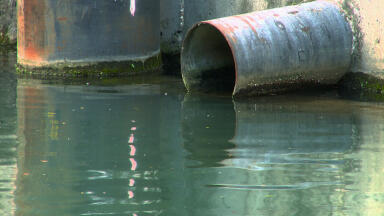
People shunning the professionals and instead deciding to do their own plumbing works have created a wave of raw sewage being increasingly pumped into Britain's rivers.
The increase in water pollution has been found following a series of investigations by the Marine Conservation Society (MCP).
Dr Robert Keirle, pollution programme manager at the MCP, said: "As DIY has become more popular over the years, aided by an explosion in property programmes on television, the problem has been growing. People see a pipe, think it's the right one to attach to, and untreated water from washing machines, but also toilets, ends up going to the wrong place," he said.
"It is also probably a result of the times we live in, with people unable to afford to call in tradesmen to do the plumbing."
Thames Water believes that in the area it serves, at least one in every ten homes now have misconnected drains.
In just the past two years, the company has had to correct 3,170 properties with misconnections, which is the equivalent to 16 Olympic-sized swimming pools' worth of waste every day.
This is just a fraction of the misconnected houses in the UK.
According to the Department for Environment, Food and Rural Affairs, 300,000 properties in England and Wales have misconnected pipes.
It is thought that this figure will increase by half a million by 2015.
Mark Lloyd, chief executive of the Angling Trust, has claimed that his members have noticed a change in the fish they catch.
"The sewage removes oxygen, encouraging eutrophication, meaning that it grows a lot of algae and the water becomes stagnant.
"You get a very bland range, such as leeches and blood worms, as compared to mayfly, olives and baetis, which are crucial for young fish," he said.
"Of course one misconnection doesn't do all this, but it is death by a thousand cuts. It is a bit like having a sewage works that doesn't work. I think it is growing as a lot of people are now doing DIY and don't know the difference between the pipe leading to the sewer and to surface water."
IET Guide 2026

 Product directory