Health & safety
Published over 14 years ago. See the latest and most current information on Health & safety.
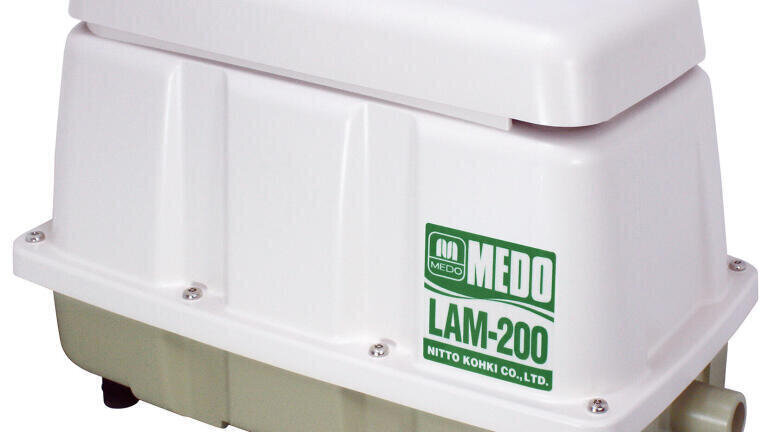
Over the past ten years, Nitto Kohki’s (Germany) Air Blowers have proven themselves, in the Mainland European Anaerobic Digester market, as an economical and non-chemical environmentally friendly way to reduce the levels of Hydrogen Sulphide (H2S) in biogas. Hydrogen Sulphide must be removed as it is corrosive to engines and can condense as sulphuric acid in engines resulting in large operational costs.
The Nitto Kohki blowers supply a controlled amount of air (approximately 1-2%) into the gas storage volume of the secondary AD tank to feed the special Hydrogen Sulphide eating Thiobacillus bacteria which are cultured on the gas/membrane or gas netting surfaces; netting can be specifically designed to increase the available surface area to maintain a suitable bacterial biomass. The Thiobacillus bacteria oxidisse the H2S to native sulphur that drops into the digestate – a much underestimated fertiliser. Introducing the correct amount of air into the roof of the AD tank is a fine art; too little air limits the efficiency of the bacteria and Hydrogen Sulphide removal, too much air might start to reduce the efficiency of the anaerobic process within the tank as well as introducing excessive amounts of Nitrogen so reducing the concentration of the Biogas. The pump has to work hard but cannot be large so the Nitto Kohki unit with its unique diaphragm-less linear shuttle configuration give a durable and silent solution.
The Hydrogen sulphide might reduce as far as 20ppm when the process is working at its most efficient, but higher levels might be acceptable depending on the final use of the Biogas – most engines require less than 200ppm H2S. The amount of air flow required will depend on the process and size of plant, but is often between 100 and 200l/min.
IET Guide 2026

 Product directory















.jpg)