Environmental laboratory
Published over 6 years ago. See the latest and most current information on Environmental laboratory.
LCTech GmbH offers an automated non-dispersive QuEChERS method for pesticide analysis. This solution not only realises what QuEChERS stands for (Quick, Easy, Cheap, Effective, Rugged and Safe), it also reaches a high matrix reduction for minimized ion suppression and purer extracts for better results.
In many laboratories the processing of complex matrices is performed without the use of QuEChERS, because these often require additional manual working procedures that are very time consuming. Many fatty matrices, for example, require freezing out of the sample, which is a considerable burden.
After LCTech has developed an automated QuEChERS method for dried matrices such as tea or spices and standard matrices such as fruit or vegetables, which are already established in laboratories, they now also cover fatty matrices such as butter or avocado. This non-dispersive method is quick and easy to implement at a reasonable price.
Small, efficient and ready-to-use SPE columns, which contain a LCTech proprietary sorbent with high matrix retention, allow minimised ion suppression with high recoveries and low standard deviations. In addition, less solvent is required, the extracts are cleaner and the results are improved versus using the conventional method. This makes the final analysis more robust, the data is easier to interpret and downtimes are avoided as no matrix contamination occurs.
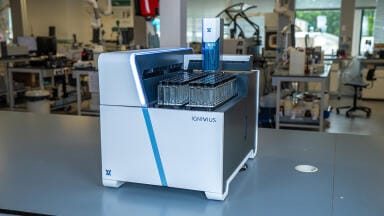
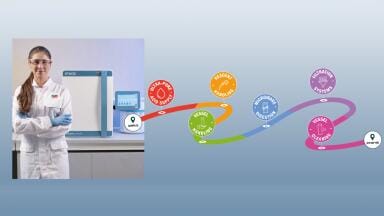
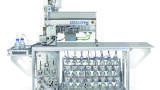
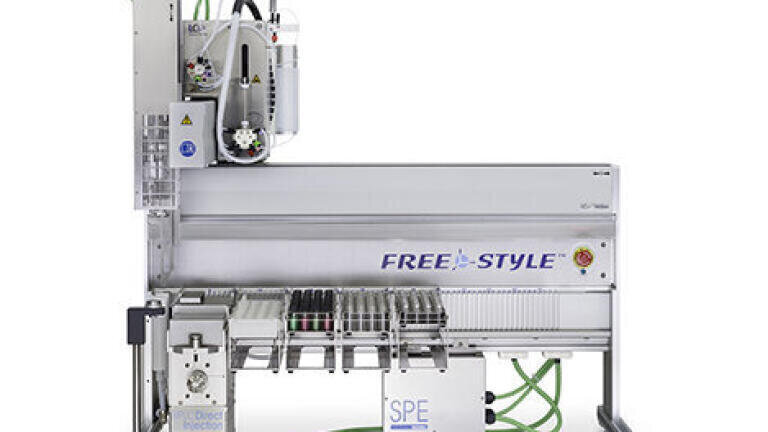
For the automated application of the LCTech QuEChERS method, the FREESTYLE robotic system is equipped with a SPE module. The non-dispersive process of the method in combination with the miniaturized SPE columns allows a clean-up within approx. 10 minutes.
To increase the degree of automation, the robotic system can be connected to a LC-MS/MS via a HPLC direct injection module. Directly after SPE
clean-up, an aliquot is injected for analysis while the next sample is prepared. Thus, clean-up and measurement of up to 120 samples in a sequence can be coupled and lead to an optimal utilisation of the LC-MS/MS system.
FREESTYLE has just a few moving or electrical parts to minimise service needs and downtime. The system can be flexibly combined and set-up with other modules for additional applications. This leaves the freedom to adapt it to the changing requirements of everyday laboratory work.
To see the advantages and the well thought-out technology of FREESTYLE QuEChERS for yourself, you can visit the LC Tech booth at analytica in Munich, Hall A2, booth 400.
IET Guide 2026

 Product directory