Environmental laboratory
Published over 6 years ago. See the latest and most current information on Environmental laboratory.
What does CVAF mean? What makes it a superior and unparalleled technology for mercury monitoring systems? This article answers these and many other questions about CVAF, Gasmet’s mercury monitoring technology.
CVAF stands for Cold Vapor Atomic Fluorescence. It is an extremely sensitive and selective measurement principle for the measurement of trace mercury levels.
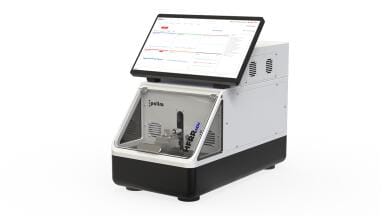
CVAF measurement principle is explained below via the main parts of the mercury analyser.
The UV detector does not see the light from the lamp, because of the 90° measurement geometry and light traps for stray light. The only signal picked up by the detector is the fluorescent light coming from the mercury atoms in the sample gas.
The cross-interference effects are eliminated by the use of the Atomic Fluorescence measurement principle. Other UV absorbing gases such as SO2 do not interfere with CVAF measurement technique as the light source is selective to mercury, which means that only the fluorescent light from the mercury atoms in the sample gas are detected.
The CMM system has been used in mercury monitoring in a sulphuric acid production process with 5–10 vol-% SO2 present, and even in this extreme gas matrix the SO2 interference does not affect the results.
In comparison with the CVAA (Cold Vapor Atomic Absorption) measurement technique, the atomic fluorescence used in Gasmet’s systems offer superior sensitivity and reduced cross-interference effects, thanks to the very specific nature of the fluorescence effect.
This is a particular advantage in applications where the concentration of mercury is low and the concentration of other UV absorbing gases such as SO2 is high. CVAF is therefore the best technology for example for coal-fired power plants and cement kilns.
Read the full article on Gasmet’s website.
IET 36.5 Sept/Oct 2026



 Product directory