CEMS
Published over 10 years ago. See the latest and most current information on CEMS.
CEM 2016, the International Conference and Exhibition on Emissions Monitoring, will feature a session on 'Mercury and Other Trace Metals' as part of the conference programme taking place in May this year in Lisbon, Portugal.
Karl Wilber, from Tekran Instruments Corporation, will be discussing an 'Overview of Mercury Emissions Compliance and Control in the United States'. This paper summarises the current mercury emissions regulatory framework in the United States, specifically the U.S. EPA Portland Cement Maximum Achievable Control Technology (PC MACT) and the Electric Generation Unit Mercury and Air Toxic Standards (EGU MATS). Examples of mercury control strategies will be presented including data associated with the efficiencies and economics of individual and combined strategies for mercury control. Finally, the paper presentation will provide examples of challenges which still face Cement and Utility operations in implementing mercury monitoring and control technologies.
Deborah Padwater, from SICK AG, will be presenting 'Low level mercury monitoring in Power and Cement plants'. The presentation will show some actual field data from Hg CEMS systems installed in coal fired power stations and cement plants, and provide some important considerations that the user should take into account when purchasing, installing and operating these systems.
Professor Joseph Siperstein, from Ohio Lumex, is also presenting a topic on mercury, namely 'U.S. EPA Compliance Mercury Monitoring at Coal - Fired Power, Cement Producing Plants and Industrial Boilers'. This presentation will give an overview and discuss mercury measurements and compliance methods available for Plant Operators. Accumulated field experience on continuous monitoring at very low levels using sorbent trap technology will be presented. As sorbent traps pre-concentrate the sample prior to analysis, they have the ability to accurately measure very low mercury levels. In fact, sorbent trap-based mercury monitors (STMM) might be the only approach that can accurately measure at the levels mandated by MATS, according to Professor Siperstein.
In addition to the oral presentations in the 'Mercury and Other Trace Metals' session, delegates of CEM with an interest in Mercury should also pay a visit to the poster area, where subjects such as 'Unconsidered Mercury Emissions from the Oil and Gas Industry', 'Mercury Freedom CEMS - Mercury Monitoring in a Cement Kiln', and 'Total gaseous mercury concentrations and lichens bioaccumulation in the Northern Adriatic coastal area (Gulf of Trieste, Italy)' will be presented.
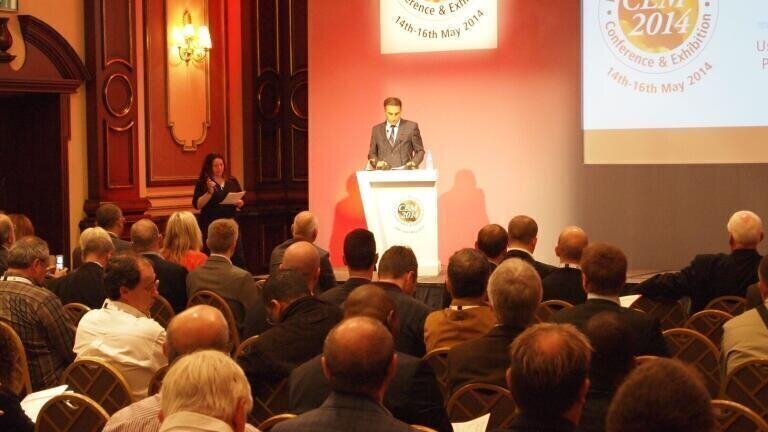
CEM takes place from 18-20 May 2016 in Lisbon, Portugal. The CEM event brings together the International emissions monitoring community to network, trade ideas and discuss technology, methods, applications, legislation and standardisation relevant to all atmospheric pollutants which include particulates, SO2, NOx VOC, trace elements and greenhouse gases.
IET Guide 2026

 Product directory











.jpg)