Air monitoring
Published over 3 years ago. See the latest and most current information on Air monitoring.
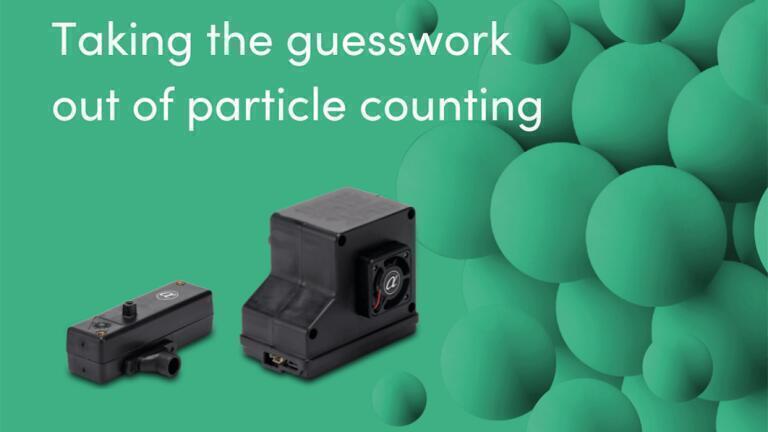
Alphasense has announced an increase in production capacity, automation of calibration elements, and software upgrades for its Optical Particle Counter (OPC) products to meet rising demand. The company's latest iterations of the OPC-N3 and OPC-R2 products have seen significant growth in demand since their launch in 2021, coinciding with the rise of air quality on the global agenda.
To meet growing demand, Alphasense has invested heavily in the supply chain, training, and infrastructure required to meet capacity and future demand. The company has also enhanced its bespoke software capabilities to enable a higher volume of concurrent calibrations, allowing for significantly reduced lead times as OPC stock builds. Additionally, Alphasense has refreshed its software offering, improving the customer interface and giving users access to a range of features previously only available in-house.
Alphasense OPCs measure the full range of PM1 to PM10, providing reliable and repeatable data, unlike most low-cost particle sensors that estimate volumes of particles based on a single size category. The wide-ranging OPC-N3 and the smaller OPC-R2 provide digital outputs of PM1, PM2.5, and PM10 (and optionally PM4.25) along with a histogram of particle count for each of up to 24 user-configured size categories. Alphasense's proprietary flow correction technology ensures stable readings, even in high-dust environments, and is a key factor in several universities and research organizations independently verifying Alphasense OPCs as providing best-in-class performance.
Will Parrett, Sales & Marketing Director EMEA at Alphasense, said: "Alphasense's range of OPCs has been developed hand in hand with aerosol scientists and engineered to deliver the accuracy expected from industrial-grade monitors in more workable size formats, and at a fraction of the price. Going forward, customers can expect the same high-quality standard of product but delivered much faster."
IET Guide 2026

 Product directory



















.jpg)