Water/wastewater
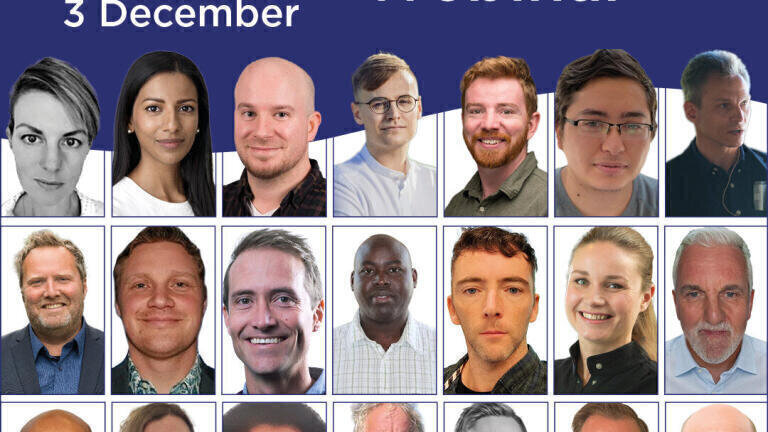
The second session of the SWIG Global Webinar 2025, chaired by Andy Nicholls, cast a wide net across the globe.
During the session we explored how diverse regions - from Cape Town to Helsinki - are deploying sensor technology to solve critical water challenges.
The session highlighted a shift from purely technical monitoring to integrated, community-driven solutions.
Dr John Okedi from the University of Cape Town opened the session by addressing the critical issue of data scarcity in Africa.
With conventional monitoring systems proving too expensive and vulnerable to theft, Okedi’s team is championing the use of low-cost IoT sensors.
By developing systems that cost around $500 (infrastructure included) compared to thousands for off-the-shelf alternatives, they are successfully monitoring groundwater, greywater reuse and stormwater detention ponds.
Okedi emphasised that while battery life and security remain challenges, the move toward "flooding catchments with sensors" is vital for understanding hydrological changes in a water-stressed continent.
Moving to Europe, Mary Vainio from Forum Virium Helsinki introduced a novel approach to innovation: pre-commercial procurement (PCP).
Through the €19 million PCP-WISE project, Helsinki is not just buying off-the-shelf products but co-creating solutions for climate resilience with private companies.
This method allows cities to define their "long-term needs" before the technology even exists. It fosters rapid prototyping for flood and drought management.
Complementing this, Professor Floris Boogaard shared three decades of Dutch climate adaptation.
With over 10,000 nature-based solutions (like bioswales) now mapped on ClimateScan, Boogaard highlighted the power of citizen science.
He argued that engaging the public - whether through mapping projects or demonstrating that bioswales don't breed mosquitoes - is essential for the long-term efficiency of green infrastructure.
The session also debuted cutting-edge sensing technologies.
Till Zweed from German startup Zetris showcased a real-time inline sensor for microplastics. Unlike traditional lab analysis, which is slow and expensive, Zetris uses electromagnetic fields and machine learning to detect particle contamination continuously.
This allows wastewater plants to plan new cleaning stages effectively under the Urban Waste Water Treatment Directive.
Finally, Tim Arkinstall from SeaSignum presented a solution for "invisible" monitoring.
Using electromagnetic field technology to transmit data through water and rock, SeaSignum eliminates the need for unsightly kiosks and stilling tubes.
This wireless subsurface capability is proving crucial for deploying sensors in sensitive ecological sites, urban concrete channels and difficult-to-access river catchments where traditional infrastructure is unfeasible.
The session concluded with a consensus on the need for convergence.
Whether it is John Okedi’s low-cost networks or Mary Vainio’s smart city data lakes, the future lies in interoperability.
As Tim Arkinstall summarised, the goal for the next decade is a consolidated view where satellite data, physical sensors and citizen science merge to provide a single, undeniable truth about the health of our water systems.
IET Guide 2026

 Product directory












.jpg)