Water/wastewater
Published over 9 years ago. See the latest and most current information on Water/wastewater.
With so much complacency from the world’s ‘leading’ countries, the effects of climate change seem to be constantly speeding up. Arctic ice is melting, sea levels are rising and consequently coastal land is being submerged by water. But while this is causing the total land mass to shrink, there are some instances of land growing too.
To the south of the Bering Sea, Bogoslof Island has doubled in size. A long-term effect? Not really. The increase happened in just over a month – from the end of December 2016 to the end of January 2017. But what caused it?
Sized at just 0.293 square kilometres, Bogoslof is certainly one of the smaller islands off the coast of Alaska. But unlike some of the other islands, Bogoslof is home to a submarine stratovolcano. From around Christmas Day 2016, volcanic activity began on the tiny island – which continued for over a month.
Around January 18th the activity picked up. Huge ash plumes, up to 31,000 feet, became a regular occurrence. Every few days these plumes have been shooting up – with one even reaching 36,000 feet – along with blistering lava pouring out. It’s this lava that has led to more land on the island, which is now 0.623 square kilometres in size.
This isn’t the first time Bogoslof has expanded its land mass though. A similar process took place in 1992, as well as several others before then. In fact, since its emergence in 1796, Bogoslof has been adding bits of land through eruption. It isn’t all growth though. Weaker parts of the land created from lava flow are eventually eroded by the sea.
Given this ongoing change on the island, you might be wondering how people live there. And of course, they don’t. The island is unsuitable for human inhabitation because of its climate, remoteness and of course its volcano. But Bogoslof is home to over 90,000 sea birds and was officially declared a wildlife sanctuary by Theodore Roosevelt in the early 20th century.
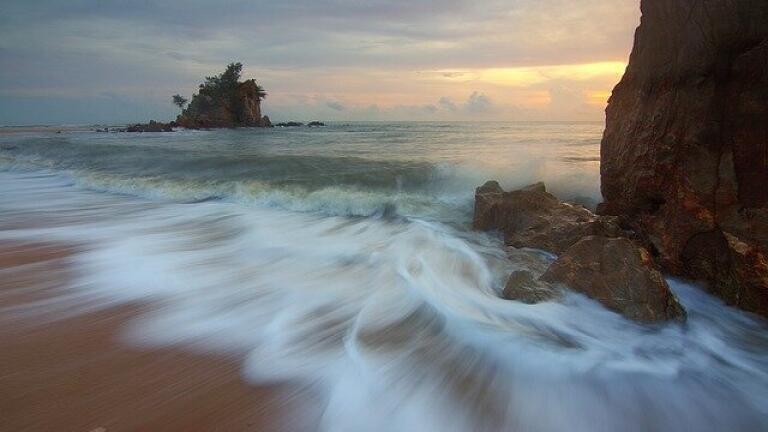
Closer to home, the problems with coast are something we’re more familiar with. But as well as flooding and erosion, there are problems with wastewater and agricultural run off. It’s important we monitor the coast so we can better understand the problems and implications of our actions – and how we can solve them. ‘Is Coastal Monitoring just a Drop in the Ocean?’ explores this topic further.
IET Guide 2026

 Product directory