Portable & field testing
Published over 13 years ago. See the latest and most current information on Portable & field testing.
Tinytag data loggers (UK) have a reputation for robustness and durability, and nowhere are these attributes more important than for those used as a key part of environmental research in the world’s highest mountain region, the Himalayas.
The International Centre for Integrated Mountain Development is an international non-governmental organisation that works to reduce poverty and improve the livelihoods of people living in mountain regions. The ICIMOD is using Tinytags to help evaluate glacial contributions to stream flow in the Himalayas, as part of the Cryosphere Monitoring Project which is funded by the Royal Norwegian Embassy.
Dr. Joseph Shea is a glacier hydrologist with ICIMOD responsible for the Project which also covers the management of automatic meteorological and hydrological stations. Debris-covered glaciers exist throughout the Himalayas and field studies show that the presence of thick debris cover insulates the ice beneath from melt. However recent remote sensing studies have demonstrated that the debris covered areas are melting at the same rate as the clean-ice areas. The Tinytag loggers are being used to examine the heat conductivity of the debris layer, a parameter which is required to model the glacier melt, and to help solve this apparent mystery.
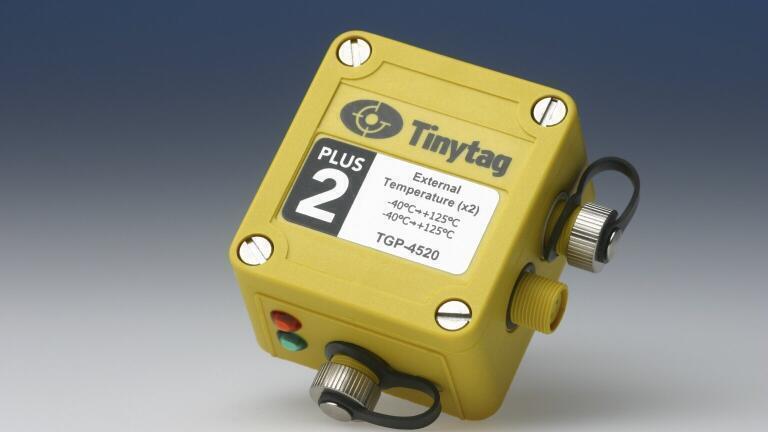
Two Tinytag Plus dual channel temperature loggers each used with two flexible thermistor probes have been installed at two sites on the tongue of the Langtang Glacier, which is in Langtang Valley north of Kathmandu, Nepal. They are monitoring temperatures at the surface of the debris layer and at the ice/debris interface every 20 minutes, and will be retrieved for analysis after a period of about 7 months. The recorded data will be used to estimate the thermal conductivity of the debris layer, which allows researchers to quantify the amount of heat transferred to the ice and the resulting melt.
As a robust, weatherproof sensor, Tinytags fit the bill for the rough climate and terrain in the area. As Dr. Shea comments, “At 4700 metres you get intense heat, cold, rain, and snow in all seasons – and sometimes in one day! We were confident of leaving the loggers to record reliably, and set up was simple.”
Another Tinytag will also be installed at the ICMOD Knowledge Park at Godavari, Nepal, which is a 30-hectare park attracting over 5000 visitors a year. The Park is a repository for important biodiversity resources and a practical venue for testing sustainable technologies and farming practices, and demonstrating them to farmers, researchers, students, and development practitioners. The logger will be an interesting added feature for the Park with details as to how it is being used.
Manufactured in the UK, data loggers in the Tinytag range monitor environmental parameters including temperature, humidity, power usage and CO2 in a range of applications and industries across the world. Recorded data is downloaded to a PC via a USB cable and viewed with easy to use Tinytag Explorer software.
IET 36.5 Sept/Oct 2026

 Product directory


.jpg)