PFAS analysis
An expert in science policy and communication, Stephanie is a leading voice on the regulation of PFA, recently giving evidence to the UK Environmental Audit Committee's enquiry into the environmental impacts of these substances. In 2025, Stephanie featured in BBC Panorama's investigation, ‘The Truth About Forever Chemicals’.
It's really great that the new Environmental Improvement Plan was finally released. As you say, they had a whole section on PFAS, including promising the creation of an action plan in 2026 as well as some measures for the Environment Agency, the Department for Environment, Food and Rural Affairs (DEFRA), and Health and Safety Executive (HSE) on chemicals regulation law. The full details of the action plan are expected this year. We're hoping that it covers a broad range of areas, because PFAS is so prevalent in supply chains from upstream to downstream, in the environment and the products we use. So, it needs to be quite comprehensive.
First of all, it should take a cross-governmental approach to addressing PFAS, because it is an issue that concerns multiple government departments. For example, it will need to address the Office of Product Safety and Standards, DEFRA, the Environment Agency, the HSE, the Food Standards Agency, the Drinking Water Inspectorate and OFWAT - or whatever the regulator is renamed as, following the government’s reorganisation of the water regulators. Such an approach means that the whole lifecycle of PFAS is addressed would be able to intervene in the whole life cycle of PFAS.
It definitely needs to include actions upstream that would deal with the use of PFAS in manufacturing, like environmental permitting to make sure that we're stopping pollution at the source. We need a more comprehensive understanding of how PFAS moves through supply chains as well as where it ends up, to make sure that we're using it in appropriate ways and not allowing exposure to happen to the environment or to us. Downstream, we need to be asking questions like: where and how is PFAS managed at the end of its life? How does it affect things like our goal to move to the circular economy? So, there's a lot of different components to an effective policy.
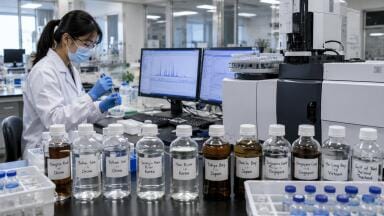
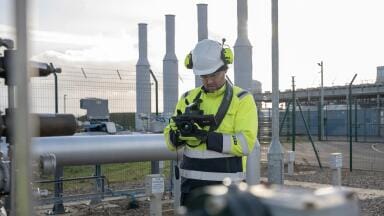
Certainly, monitoring must be a central component of this action plan. First of all, we need to know where pollution is entering the environment, which would require actions like monitoring effluent from factories and wastewater treatment, and monitoring landfill leachate. But also, monitoring throughout supply chains, making sure data is shared properly and that we have the right analytical methods to test products if we suspect there might be PFAS in them. A large part of this strategy is going to rely on our ability to find out where PFAS are, how they get there and how they move around, because we can't control what we don't know.
There are definitely ways to do it already, but they could be expanded or made quicker and cheaper.
At the moment, we have robust methods to test water for a number of different kinds of PFAS. We have some methods to test materials or products, but these could be better developed. Soil measurement, too, could be much more comprehensive.
One of the central challenges, however, is that there are lots of different potential kinds of PFAS. I've heard figures like 10-, 12- and 15,000, depending on what definition you use and what list you're looking at. Now, that said, just because there are a lot of different kinds of PFAS that could exist, that doesn't mean every single one of those is existing out in the world at the moment. But we there could be historically used PFAS that we are not tracking, and there could be new PFAS of which we are unaware. Similarly, because PFAS are often used in quite small quantities, they don't always qualify to be registered for chemicals regulation. So, for example, under REACH, the UK's chemical legislation, you don't need to register a substance if it's used under one tonne per year. Due to that, when monitoring the environment, sometimes we have to resort to some suspect, non-targeted forms of analysis to try to figure out if there's other PFAS out there that we're not expecting. However, I know there are many labs working on how to better screen for PFAS that we might not know are there and then identifying them.
First of all, we have a good idea of where PFAS are made and where they're typically used upstream. But as products, chemicals and ingredients move through the supply chain, we often lose track. For example, if you're a manufacturer and you're purchasing a pre-made mixture, it might not be clear that there's PFAS in it, if it's not on a list of substances of very high concern.
But my main concern is landfill leachate. Landfills are definitely an under-monitored area. In the case of old landfills, leachate might go directly into the environment, whereas leachate from newer landfills tends to be taken to wastewater treatment plants for processing. What's primarily concerning is that there have been some recent studies which have demonstrated that more PFAS comes out of landfills than goes in. That could mean that a certain type of PFAS is breaking down into other kinds of PFAS with smaller structures. But sometimes, there are transformation products, or materials are brought to landfill that, as we spoke about, aren't clearly labelled as containing PFAS. Landfills, then, may be a significant large source of PFAS that we are under-monitoring.
The first challenge is that there are possibly types of PFAS out there that we don't know about. Second of all, some PFAS can transform in the environment, not all of them, however. PFAS are nicknamed ‘forever chemicals' because they last in the environment for a really long time and don't really break down. So, when I say that they break down, it sounds a bit counterintuitive but, in this case, I mean that sometimes some PFAS degrade into other kinds of PFAS. Basically, these chemicals find their smallest, most stable form and that is what persists.
For example, there are some types of PFAS that are used in refrigerants, and these fluorinated gases are highly volatile, breaking down in the atmosphere into their smallest form. Sometimes, there's a tail of PFAS on the molecule that will break off and that is what ends up in the environment. When we're tracking PFAS through the environment, we may end up focussing on what was recorded as being released and fail to look for these final forms.
Generally, there are so many different sources of PFAS, and often these sources converge in wastewater treatment plants. These plants are frequently the last step in the process, so the question is how we trace these back and stop it at the source.
Well, we don't have any statutory drinking water limits yet, we have guidelines but we'd like to see them made statutory. Nevertheless, the guidelines are still enforceable via certain requirements for drinking water. In January 2025, The Drinking Water Inspectorate introduced new guidance that limits the sum of 48 PFAS to 100 nanograms per litre.
This brings us more in line with some other international leading standards, like in the EU, where they have 100 nanograms per litre but for a sum of 20 PFAS, not 48. So, we're actually doing better in the sense that we're looking for more, which is excellent!
But we would like to see the limits for individual PFAS lowered because, technically, the individual limit is also 100 nanograms per litre. Of course, because it's a cumulative limit, it's unlikely that any given PFAS is going to be exceeding that limit, but it would still be good to see individual limits for some PFAS that we know are extremely harmful, such as PFOS and PFOA. The U.S., for example, has a limit of 4 nanograms per litre for each of those in their drinking water. Even the island of Jersey has recently said they're going to adopt a standard of 4 nanograms per litre for PFOs, PFOA, PFHXs and PFNA.
In terms of other actions, though, you mentioned environmental permitting, which is absolutely something we think the government should be working on. The government already has the power to put environmental permits on industrial facilities as well as landfills and wastewater treatment plants. But, at the moment, there are no limits for PFAS in environmental permits. Some sites are required to acknowledge that they use or have used PFAS, but there is no limit on what they can emit through their effluent and lot of other permits don't even include it at all. This is something which we think could be done to stop pollution at the source, making sure that companies using or manufacturing PFAS have clear limits on emissions and are responsible for cleaning up pollution if it occurs.
Absolutely. I think this is something that's really important because we've seen, for example, with this and other issues of pollution, often we as consumers or citizens have to foot the bill. Whether that's because environmental clean-up is something that's taken on by the government and so our taxes are funding it, or if, in the case of water treatment, our water bills have gone up. We think it's really important that polluters are held to account for pollution that they create, especially for something like this, which is really hard to contain and can spread around in the environment once it's out there.
If there is a clear principle, this should create an incentive to avoid pollution. It might even provide a good incentive for innovation in new products, processes or materials and ingredients that are safer and more sustainable.
There are promising examples that have already been introduced. In the EU, the new Urban Wastewater Treatment Directive was updated last year to help pay for the installation of new wastewater treatment technology. In particular, this relates to micropollutants that are contaminants of emerging concern, and the EU has decided that responsible sectors are now accountable for a lot of this pollution. For example, pharmaceuticals and cosmetics were the two main industries that are now required to contribute to the cost of upgrading wastewater treatment works to deal with these new pollutants.
Another example is the Super Fund law in the U.S., which gives its Environmental Protection Agency (EPA) the power to identify who is responsible for environmental pollution and requires them to clean it up. The law also enforces a levy which is charged to the whole of the chemicals industry. This goes into a pot called the Super Fund, which helps to pay for clean-up, if the EPA can't identify who's responsible.
IET Guide 2026

 Product directory