
Noise monitoring
Published over 17 years ago. See the latest and most current information on Noise monitoring.
As one of the windiest cities in the Southern hemisphere, Wellington in New Zealand is ideal for wind farming, but the plans for installing up to 68 wind turbines caused locals to raise
concerns about the potential noise impact.
Local energy provider, Meridian, was asked to monitor background noise at five of its wind farm locations before building of the new site began, but wind turbine noise is notoriously difficult to measure, as the low sound doesn’t trigger sound level monitors. By using several Noise Management Terminals, from Sound and vibration expert, Brüel & Kjær (UK), Meridian was able to set up timed recordings to carry out its investigation.
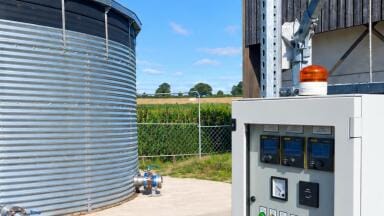
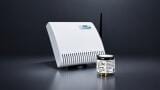
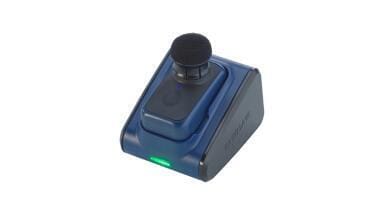
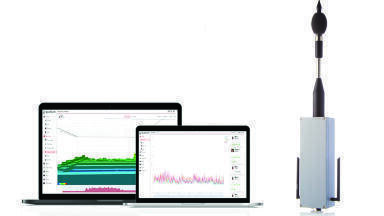
The equipment used consisted of an Environmental Noise Management Server (Version 2) Type 642, five Noise Monitoring Terminals Type 3639-E-203 with Weatherproof Microphone Units Type 4198 and Weather Stations MM-0256. A time trigger recording option was created to capture sound recordings and the data saved as WAV files (instead of MP3) for subsequent tone assessment.
In the UK, many Local Authorities receive complaints about low-frequency noise, but subsequent investigations are difficult and time-consuming to make. With the introduction of modern noise monitoring instruments, such as sound and vibration expert Brüel & Kjær’s 2250 Hand-Held Analyser - with built-in sound recording and logging 1/3rd octave frequency spectrum - the procedure for practical assessment (developed by Drs Moorhouse, Waddington and Adams at Salford University) has been simplified.
IET 36.5 Sept/Oct 2026



 Product directory





















.jpg)