Environmental laboratory
Published over 7 years ago. See the latest and most current information on Environmental laboratory.
Existing laser-based gas detection technologies have reached a performance plateau. Indeed, traditional diodes do not lase in the mid-infrared fingerprint region where molecules absorb best and therefore are limited in sensitivity. NDIR techniques suffer from cross-interference and make it difficult to selectively detect a species. FTIR techniques can sometimes do the job but are rather expensive. Multi-pass cells don’t scale down in price with volume production and the mechanical moving parts don’t make it a robust solution for vibrating environments. Finally, the problem of cross-interference is not limited to laser-based techniques but can also be considered for other techniques like electro-chemical cells or paramagnetic techniques.
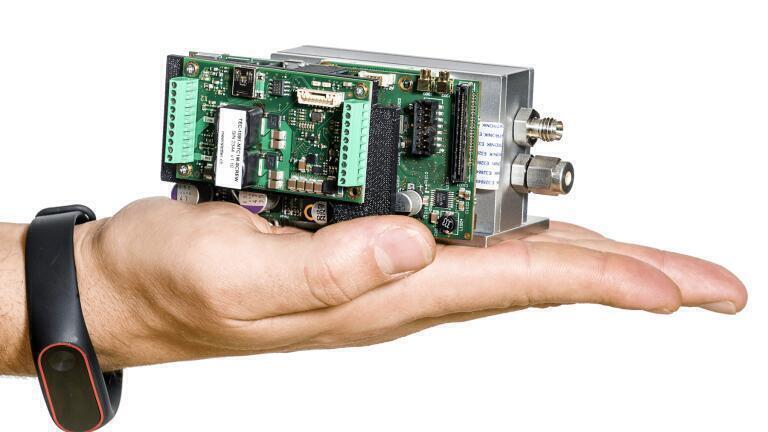
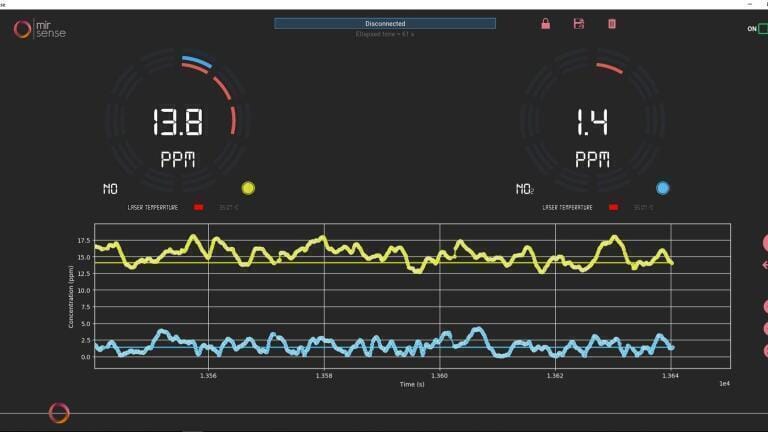
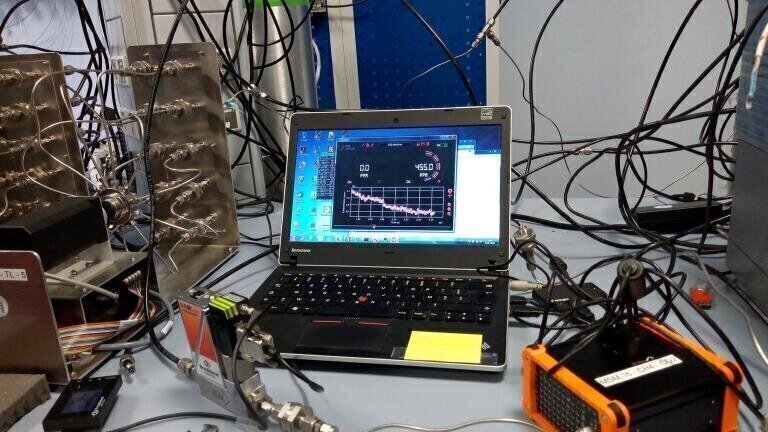
mirSense has developed a solution to meet these needs. After several years of development inside semi-conductor private labs, the mirSense company enters the market of gas analysis with a product innovation that combines high performance (sub ppm detection limits), small dimension (the size of a matchbox) and good cost-benefit ratio: the multiSense.
The multiSense combines two technological bricks: infrared quantum cascade lasers (QCL) and a heated photoacoustic cell. Both bricks have reached industrial maturity after several years of development.
QCL lasers are one of the few technologies able to emit in the mid-infrared (3µm to 12µm of wavelength) at ambient temperature and in a direct way. This wavelength range, well-known to spectroscopists, is the most significant range for the analysis of gas components because of the very strong absorption lines, with many molecules displaying a unique fingerprint. This range is well suited for trace detection of molecules.
Coupled to the lasers, the second technological brick, a heated photoacoustic cell, allows the detection of the spectral signature of the gases. By absorbing mid-infrared radiations, the gas will create a sound and emit various acoustic pressures that are detected by microphones. This system has no moving parts and is therefore more robust than multi-pass cells. It also has a great dynamic range with no saturation of the detector, allowing to measure from 1 to thousands of PPM for example.
Thanks to its know-how and by combining these two proprietary technologies, mirSense can offer detection performances of a few molecules amid one billion (10 ppb) in a very small format of a few cubic centimeters of volume, 10,000 times smaller than the current systems, for a cost inferior to current technologies.
The strategy of mirSense is not to sell an analyser to the end-users but rather to supply customised OEM modules for manufacturers of analysers that will integrate the mirSense modules inside their chassis.
IET Guide 2026

 Product directory