Environmental laboratory
Published over 10 years ago. See the latest and most current information on Environmental laboratory.
An unlikely collaboration between the RSPB and clean technology firm Anesco could provide a safe and stable habitat for many of Britain’s endangered species. The project is being earmarked for solar farms across England and Wales, where unused areas around the solar panels will be filled with meadow flowers and seeded plants to sustain the animals.
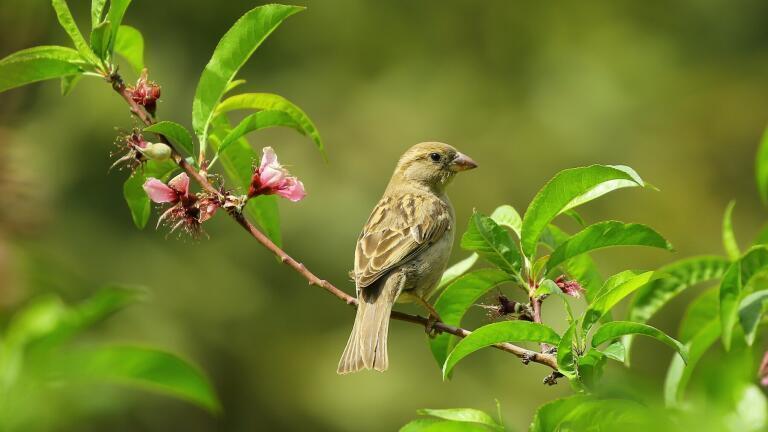
Much of Britain’s fauna (in particular, its birdlife) has found itself displaced from its normal habitat due to intensive agricultural farming, as well as coming under threat from climate change. This incentive looks to replace those areas while simultaneously supporting renewable energy.
Much of the UK bird population has been decimated over recent years as farmers look to get the maximum yield from their land and the birds are driven away as a result. Among others, the following birds have seen significant reductions in their populations in the last 40 years:
In addition to the avian population, bees, butterflies, mammals and reptiles have also seen their way of life come under threat due to agriculture and climate change.
Under the proposed plans, the flowers planted alongside solar panels in their unused margins could provide the food, sustenance and shelter these animals need. The project should have a knock-on effect up the food chain, encouraging growth of many different species across the board.
“Encouraging biodiversity has always been a priority for us and we’re thrilled to be working with such a respected and knowledgeable organisation as the RSPB to build on our existing commitment,” said Adrian Pike, head of operations at Anesco. “We will be maximising the positive impact that our sites have for local wildlife, while focusing on supporting those species that really need it.”
It is schemes such as these, in conjunction with new technologies for techniques such as large-scale evapotranspiration measurement, which can really help to give struggling and endangered species a boost and maintain their longevity in the British Isles.
The project will not only be good for nature in its nurture of threatened species, but it should also serve to highlight the importance of renewable energy.
“We’re interested in renewable energy because the threat of climate change is the biggest threat to nature and to people,” explained Darren Moorcroft, chief of species and habitat conservation at the RSPB.
“The opportunity of this partnership is both mitigation and adaptation. The panels are helping us to reduce our carbon emissions and the habitat within the solar farms can create the places for priority species to live and survive and thrive.”
IET 36.5 Sept/Oct 2026



 Product directory