Business news
Published over 7 years ago. See the latest and most current information on Business news.
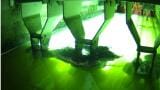
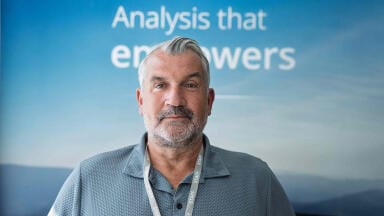
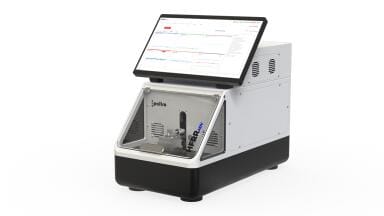
Scientists at the John Innes Centre, based in Norwich, in the East Anglia region of the UK, are relying on automatic photobioreactors from algal specialists Algenuity to look more closely at algal blooms – a phenomenon that is increasingly becoming an issue and has been linked to extreme weather patterns. Professor Rob Field, a Project Leader at the centre, explained: “Our work so far has centred on the Prymnesium golden algae. These produce a toxin lethal to gill-breathing organisms which has major implications in fish farming worldwide, much as blue-green algae produce substances that are toxic to mammals. They also cause major issues in our local waterways, the Norfolk Broads. Our aim is to understand harmful algal blooms and establish early detection mechanisms so that they can be prevented or dealt with. It is likely that a bloom is caused by a combination of events – including sunlight, phosphate and nitrate levels – which lead to an increase in pH, a decrease in oxygen partial pressure and the release of toxins.”
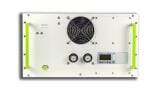
Rob continued: “We’ve used the Algem® photobioreactors for basic cell culture for a few years now, to vary the growth conditions and amount of light that we provide for the algae. The system acts as a chemostat to regulate and monitor the algae, which saves us a great deal of time, and means we don’t have to keep sampling to count algal cells; we can allow the computer to take control, and can dive in at any point to look at the metabolites produced. We can also stack multiple systems together if we need to scale up, which is a real advantage because the demand for algal biochemistry can dramatically change from a flask to a larger vessel.”
“The Algem is very easy to use and has allowed us to complete our control experiments for collaborators such as the Environment Agency, the Broads Authority and Natural England. Without it, our work would be a lot more cumbersome because we can put it on in the background and just let it run; it’s a very practical piece of kit,” Rob concluded.
Please visit
IET 36.5 Sept/Oct 2026



 Product directory