Water/wastewater
Published over 8 years ago. See the latest and most current information on Water/wastewater.
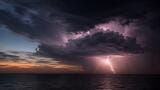
The South of America was thrown into chaos last month as Storm Harvey hit the states of Texas and Louisiana. With up to 40 inches of rain in some areas, the storm – which escalated to a hurricane – has left thousands of people homeless and even led to several deaths. The cause? Well, as usual, it’s classed as a natural disaster. However, some are suggesting that this ‘natural disaster’ might actually be partly man-made.
Wait – the United States has always had hurricanes. How can climate change be to blame? Well, it’s not necessarily that climate change caused the hurricane. It did, however, make it worse, according to the World Meteorological Organisation.
“Climate change means that when we do have an event like Harvey, the rainfall amounts are likely to be higher than they would have been otherwise,” said WMO spokesperson Clare Nullis.
When the temperature of the earth rises, so too does the temperature of its seas. Water that’s warm evaporates quicker, which is exactly what’s happening with the earth’s seas. Add to that the fact that warmer air can hold more water vapour and you have a deadly combination.
The more our temperature rises, the more moisture our skies can hold, which eventually drops back down in large amounts, as with storm Harvey. To be more precise, the Clausius-Clapeyron equation states a 3 percent rise in atmospheric moisture for every 0.5 degree Celsius of warming.
So, can we assume that this was the case for Texas and Louisiana? Pretty much. Figures show that temperatures around the area have risen by around half a degree in recent years, added onto another half a degree in past decades. That’s led to record levels of precipitation, surpassing all other recorded storms in the US. With as much as 49.2 inches of rainfall in parts of Houston, the US National Weather Service even had to introduce a new colour for its weather graphs.
Then there’s the ice caps. Over time, warmer temperatures have led to melted glaciers, causing sea levels to rise. As a result, the surge of the storm was also greater. In plain English, this is the rising of the sea because of a storm’s force. It meant more water was forced on land from the Gulf of Mexico in Louisiana and Texas.
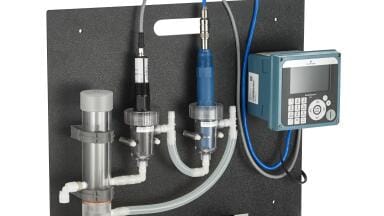
Flooding has a lasting impact in a number of ways. One of those is the huge effect on a region’s water. When floods hit, they drag all sorts of chemicals and waste into the water – highlighting the need for water sensors. The article ‘Uses and Benefits of Low Cost Water Sensors’ explores how they are central to maintaining water quality in streams and rivers, as well as other applications.
IET Guide 2026

 Product directory