Portable & field testing
Published over 11 years ago. See the latest and most current information on Portable & field testing.
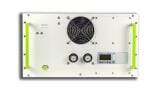
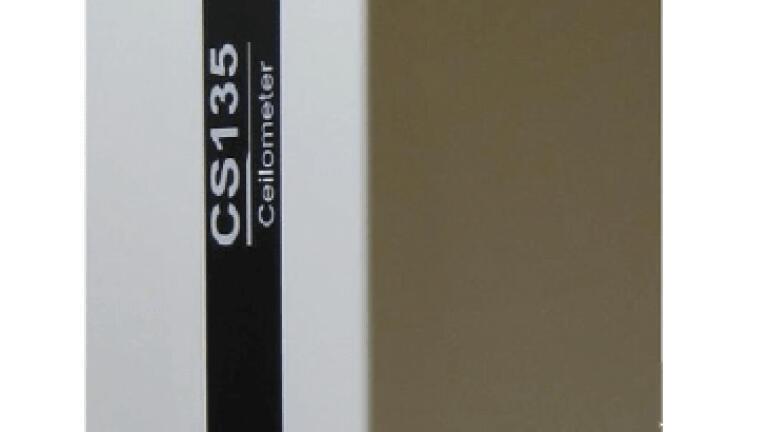
The Campbell Scientific (UK) CS135 is a LIDAR (Light Detection And Ranging) device that emits short pulses of near infra-red light into the atmosphere. The pulses from the CS135 measure elastic scattering for both aerosols and cloud droplets. The time between transmission of the pulse and the return signal gives the range, and therefore height, of the scattered aerosols. The variation in the strength of the backscattered light signal with height gives a profile of scatter coefficients and allows mixing layer heights (MLH) to be identified by the scattered aerosol signatures.
MLH is an important parameter in air quality assessment and forecasting because it is below this height that pollution is trapped. As there may be more than one MLH as new layers may form underneath an existing one, the CS135 has been designed to report up to three distinct mixing layer heights .
The CS135 system includes our ViewPoint software, allowing visualisation the Backscatter Profile, Scatter Intensity, Mixing Layer Heights levels, and customisation of each parameter. The default CS135 data output has been pre-configured for complete raw data output.
IET 36.5 Sept/Oct 2026




 Product directory