Personal gas detector
Published over 12 years ago. See the latest and most current information on Personal gas detector.
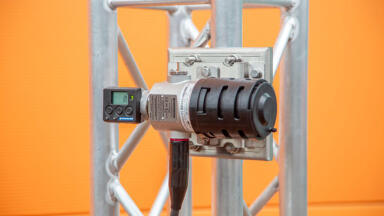
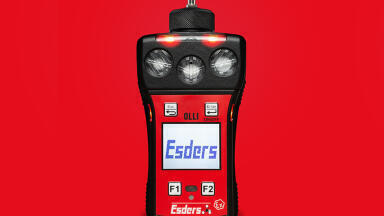
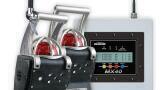
Oldham (France), an IST Company, is very pleased to announce the launch of the exciting wireless version of the five-sensor transportable gas detector, the BM 25. As wireless capabilities reach new technological milestones, the integration of wireless gas detection systems in industrial applications is ever increasing.
The network topology used by the BM 25 is a MESH network. In a mesh network all hosts are connected peer-to-peer without central hierarchy, thereby forming a net-like structure. Each node can receive, send and relay data and this avoids having sensitive points, which in case of failure, disrupts the connection of the network. If a node is down, it simply goes through another route. Mesh topology allows fast and simple deployment, high coverage versatility and high fault tolerance. It significantly reduces installation and operating costs of networks.
If a BM 25 does not respond to network communication requests, the local gas detection capability remains effective and each BM 25 will provide local alarm capability in the presence of gas.
If the network is split due to an obstacle placed in the network, it is possible to continue to work as the network will automatically adjust and form two separate networks. When the obstacle is gone, the communication resumes automatically.
.
IET Guide 2026

 Product directory