Gas detection
Published over 10 years ago. See the latest and most current information on Gas detection.
Odour management and control takes place at wastewater and sewage treatment works where sludge and wastewater is processed. This is an extremely sceptic process and odours must be controlled by a combination of liquid dosing and dry scrubbing technologies.
Liquid dosing is intended to reduce the sulphide levels to an acceptable level prior to the dry scrubbing system, so that the final scrubbing leaves a gas stream in a non-noxious state.
PROBLEM
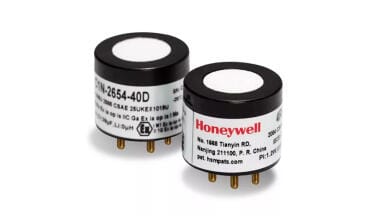
Monitoring the Hydrogen Sulphide in both inlet and discharge air has presented problems for standard electrochemical gas sensors in that gas sensors will quickly fail when exposed to the humid and damp conditions within a sewer.
Data transfer from monitoring Hydrogen Sulphide in sewer systems is required to provide a proactive response. Sewer corrosion and excessive odours can be prevented rather than simply identifying the causes in logged data after events.
SOLUTION
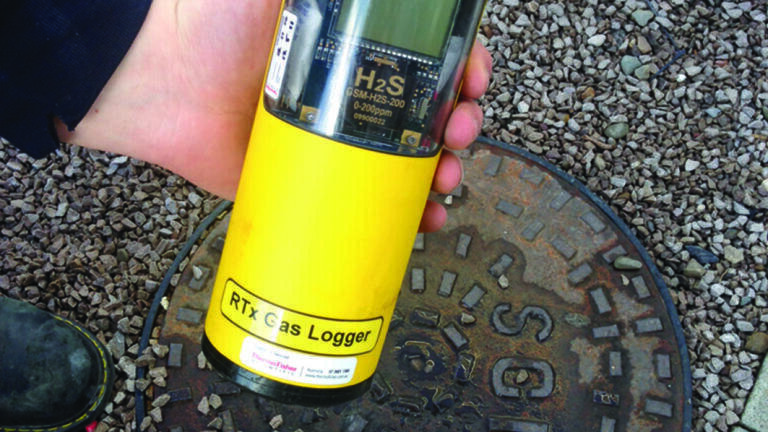
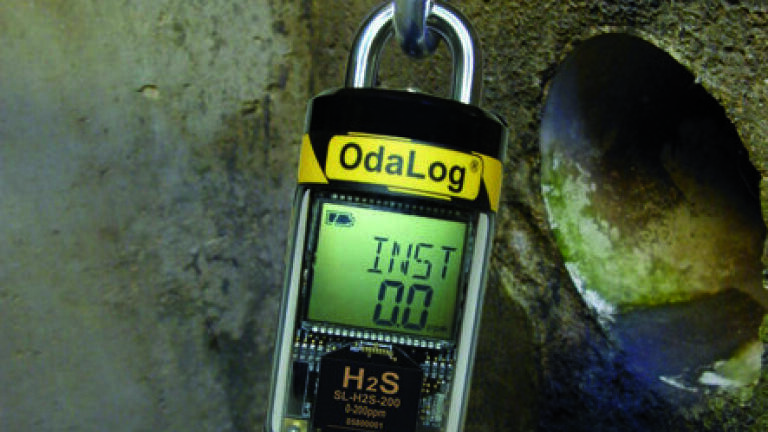
Because of their robust and splash proof designs, OdaLogs can be suspended under sealed manhole covers, positioned in sewers or integrated into dosing systems.
The OdaLog can be integrated into a dosing system to log levels of Hydrogen Sulphide (H2S) allowing the dosing chemical to increase or decrease in reaction to the H2S levels. This provides a fully automated odour abatement chemical dosing system.
The OdaLog utilises a GPRS Modem to transmit data through a GSM mobile phone system to an FTP server. The data is remotely accessible by both a PC based application and a web page that includes a searchable database.
This OdaLog enables trending, graphing and reporting of gas concentration data once it has been logged at intervals from one second to one minute and transmitted at intervals as low as 30 minutes. Data can be retrieved from the logger at any time while it is still deployed in the manhole. Up to 42000 readings can be stored on the OdaLog.
Data is wirelessly transmitted throughout the entire duration of the OdaLog’s deployment. Data is stored remotely on an FTP server so the onboard memory of the OdaLog is not a limiting factor in the deployment period.
RESULT
The most significant advantage of adding wireless to gas detection devices is to provide the potential of enabling control responses to increasing gas concentrations to be activated in real time such as allowing the dosing chemical to increase or decrease in reaction to the H2S levels. This provides a fully automated odour abatement chemical dosing system, reducing chemical usage and engineer’s time spent on site, which results in an overall cost of ownership.
IET Guide 2026

 Product directory