Environmental laboratory
Published over 4 years ago. See the latest and most current information on Environmental laboratory.
Discover the benefits of powerful ion chromatography (IC) workflows for the rapid, reliable determination of anions and cations in nuclear power plant waters. These workflows provide timely monitoring and control of ionic contaminant levels to eliminate or reduce damage from corrosion, scaling and deposition.
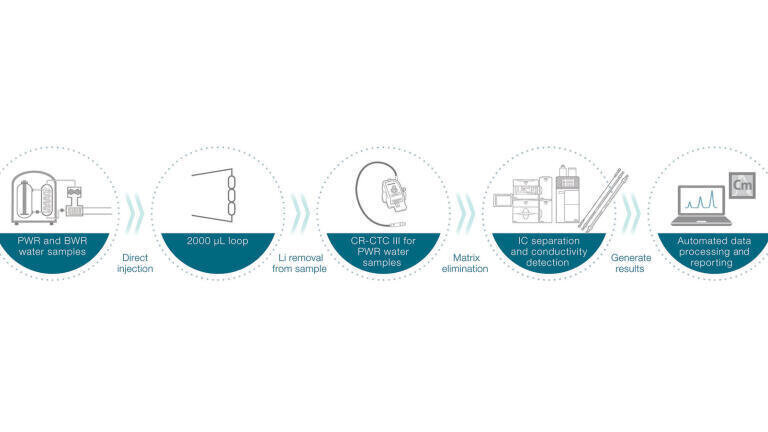
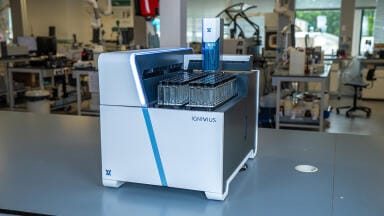
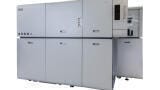
Thermo Scientific™ Dionex™ ion chromatography systems set the standard for the determination of trace concentrations of ionic impurities in nuclear power plant waters–from both pressurized water reactor (PWR) primary cooling circuits and boiling water reactor (BWR) secondary circuits. This IC workflow enables rapid and reliable low-level analysis of a broad range of anions and cations, while eliminating interferences from matrices such as borated water.
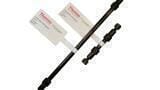
The workflow includes the IC instruments, accessories, columns and consumables to help simplify PWR and BWR water analysis. Water samples can be directly injected into the IC system for separation and subsequent conductivity detection. It uses reagent-free IC (RFIC) and the Thermo Scientific™ Dionex™ CR-CTC III Continuously Regenerated Trap Column to overcome borate and lithium interferences with automated inline matrix elimination of borate and neutralization of LiOH. Combining direct injection with electrolytically generated hydroxide eluent and high-efficiency Thermo Scientific™ Dionex™ IonPac™ AS28-Fast-4µm IC columns enables rapid determination of target anions. Results are generated using automated data processing and reporting through the Thermo Scientific™ Chromeleon™ Chromatography Data System (CDS).
The Thermo Scientific workflow for analysing ultrapure water helps scientists in various applications including:
IET 36.5 Sept/Oct 2026


 Product directory




.jpg)











-Thermo-Fisher-press-rel.jpg)
-Thermo-Fisher-press-rel.jpg)