Environmental laboratory
Published over 4 years ago. See the latest and most current information on Environmental laboratory.
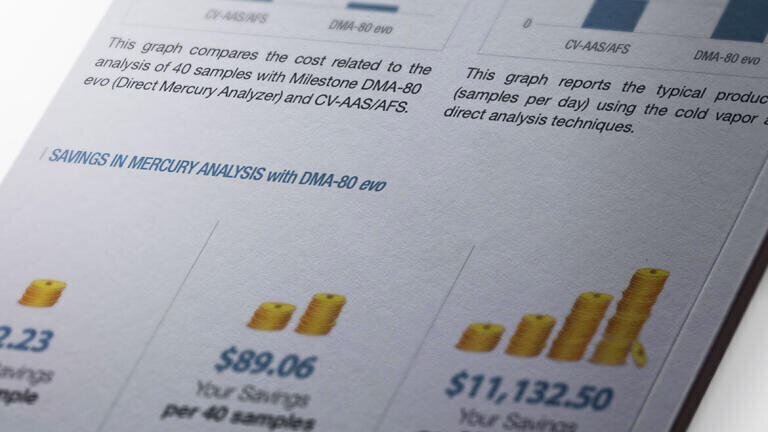
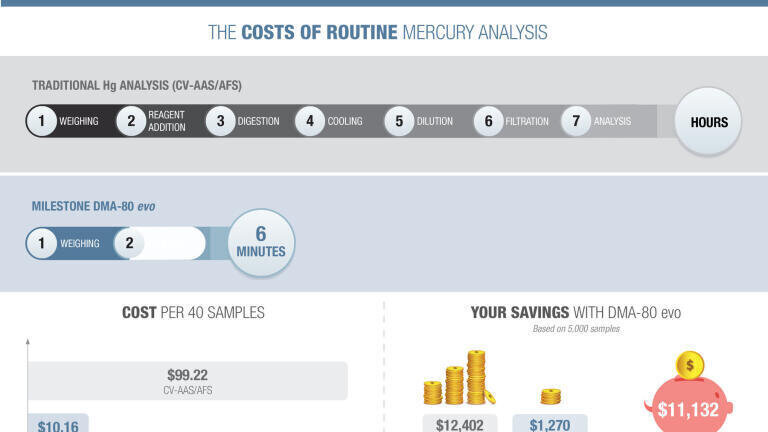
The determination of trace levels of Hg is often performed by converting Hg to a vapor and measuring its concentration either by atomic absorption or by atomic fluorescence. This is a reliable analytical procedure, but accurate trace analysis is dependent on minimizing manipulation of samples in order to avoid losses of volatile analyte and its forms and also avoiding contamination. Moreover, it requires long, and often tedious, sample preparation steps prior to analysis.
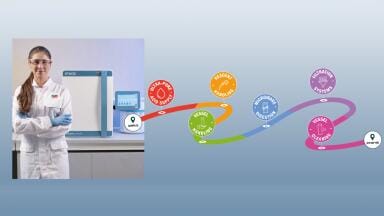
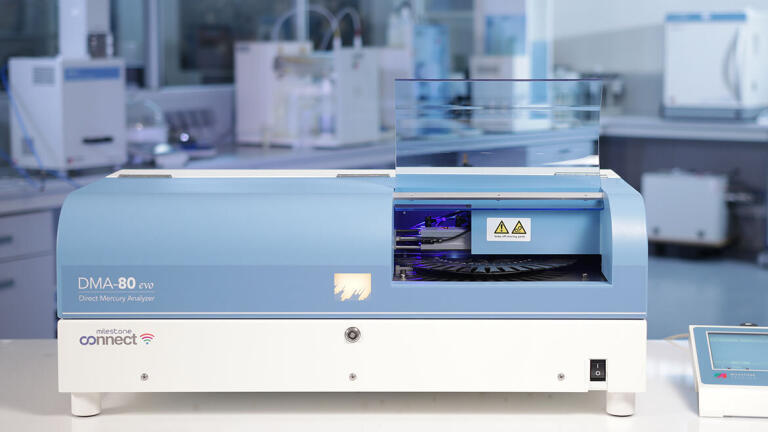
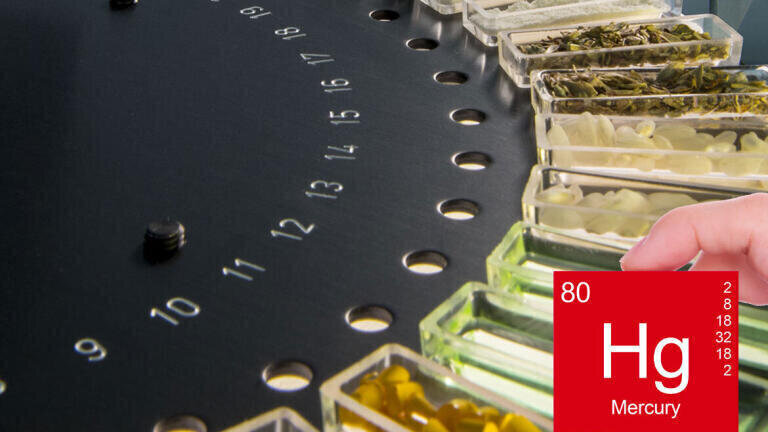
The possibility of performing all analytical steps automatically in a dedicated instrument is a great analytical strategy and the DMA-80 has proved its superb performance in applications for a plethora of samples, such as animal tissues, atmospheric particulate, coal, fish, hair, sediments, soils, vaccines, etc.
Even speciation analysis could be performed when associating the DMA-80 with a proper extraction procedure.
The selection of papers below cited focus on applications for all these samples and some comments provided by these authors are below highlighted for a glimpse of equipment capacity.
“Simplicity and high efficiency without the need for any sample preparation procedure, are some of the qualities of the proposed method… Indeed, real unknown samples from nationwide monitoring programs can be safely analysed to quantify Hg using a robust and straightforward method with an extensive concentration range.” (Ribeiro & Germano)
“On the other hand, the proposed method is much simpler and faster (approximately 6 min for filter analysis in the DMA, whereas filter digestion requires 60 min plus 15 min for CVAFS analysis with the U.S. EPA method). In addition, filter analysis is much less susceptible to contamination because no sample preparation is required.” (Ferlin, Fostier & Melendez-Perez)
“The analysis of soil and leaf samples by direct analysis of solid samples showed to be an analytical technique for total mercury quantification more precise than and as accurate as classical methods that includes sample acid digestion step. Furthermore, it is much less time consuming, considering that an autosampler with 40 boats is part of the equipment (ca. 7 samples/h).” (Melendez-Perez & Fostier)
“The mercury concentration was measured directly on the residues obtained by sequential extraction by using the DMA-80. This new instrumental technique does not require sample preparation, gives results comparable to those obtained with CV-AAS and ICP-MS and few minutes are necessary for each analysis.” (Orecchio & Polizzotto)
“Simplicity and high efficiency, without the need for any sample preparation procedure, are some of the qualities of the proposed method.” and “The method development for Hg determination in fresh fish samples using DMA-80 was successful. The total analytical process is fast, environmentally friendly, cost-effective and does not require any complex sample preparation, which minimizes risk of sample contamination. Some points have to be highlighted when using DMA-80, such as linearity evaluation and sensitivity over time, memory effect of the amalgamation system and robustness.” (Torres, Martins-Teixeira, Silva & Queiroz)
IET 36.5 Sept/Oct 2026


 Product directory