Environmental laboratory
Published over 7 years ago. See the latest and most current information on Environmental laboratory.
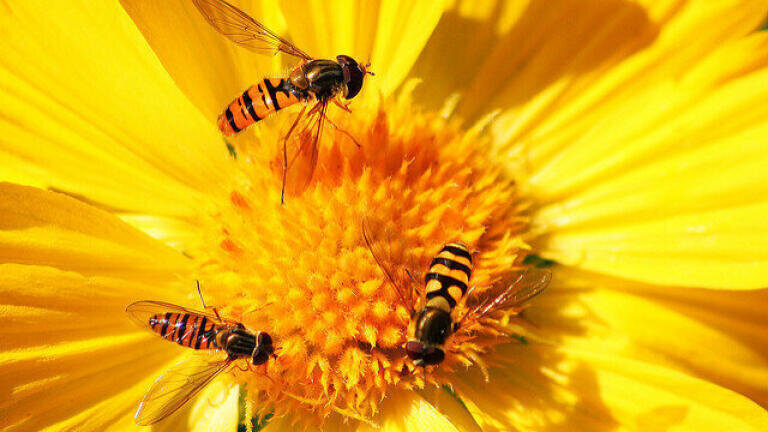
Bees can become addicted to pesticides in a similar manner to humans becoming addicted to nicotine, suggests new research from Imperial College London. After conducting a series of studies which examined how bees reacted to a choice between two different sugar solutions, one of which was laced with neonicotinoids, the researchers concluded that over time the bees showed a preference for the pesticide-laced option.
The study raises the possibility that neonicotinoids may have infiltrated far deeper into bee colonies than previously thought, and also offers a rebuttal to farmers who argue that laboratory studies don’t represent real-world conditions in the wild. However, the authors of the report were quick to point out that even less is known about alternatives to neonicotinoids and as such, we should perhaps not be too hasty in outlawing them completely. The EU passed a law earlier this year doing exactly that, much to the annoyance of the farming community.
The research team, led by Dr Richard Gill and Dr Andres Arce at the Department of Life Sciences at Imperial College London, tracked ten different bee colonies over a period of ten days. During that time, each colony was allocated its own foraging area, with sugar-dispensing feeders erected inside. There were two different kinds of solution: those which contained neonicotinoids and those which didn’t.
The results showed that while bees initially shunned the pesticide-laced solution, they increasingly favoured it over time. Given that neonicotinoids are similar in their chemical composition to nicotine, which is the part of cigarettes that makes them so addictive, it’s logical to surmise that bees were becoming hooked in a similar manner.
“Interestingly, neonicotinoids target nerve receptors in insects that are similar to receptors targeted by nicotine in mammals,” explains Dr Gill. “Our findings that bumblebees acquire a taste for neonicotinoids ticks certain symptoms of addictive behaviour, which is intriguing given the addictive properties of nicotine on humans, although more research is needed to determine this in bees.”
One of the main challenges facing pesticide analysis - and one of the criticisms which proponents of pesticides always resort to when responding to calls for neonicotinoids to be banned - is that laboratory simulations are far different to the real world. As such, the detractors of those experiments argue, the results gleaned should not be held up as definitive proof. This study, its authors believe, go some way to answering that argument.
“Many studies on neonicotinoids feed bees exclusively with pesticide-laden food, but in reality, wild bees have a choice of where to feed. We wanted to know if the bees could detect the pesticides and eventually learn to avoid them by feeding on the uncontaminated food we were offering,” said Dr Arce.
“Whilst at first it appeared that the bees did avoid the food containing the pesticide, we found that over time the bumblebees increased their visits to pesticide-laden food. We now need to conduct further studies to try and understand the mechanism behind why they acquire this preference.”
IET 36.5 Sept/Oct 2026





 Product directory