Air monitoring
Published over 4 years ago. See the latest and most current information on Air monitoring.
Ahead of last year’s United Nations Climate Change Conference, 450 medical organisations – representing over 45 million healthcare professionals across 102 countries – signed an open letter to the delegates. This so-called ‘climate prescription’ set out a range of measures to tackle climate change in the interest of preserving public health.
‘Wherever we deliver care,’ the letter declares, ‘we are already responding to the health harms caused by climate change.’
The usual suspects are named, of course – malnutrition caused by drought, injury caused by extreme weather, and the rise of new vector-borne diseases. But the signatories place a greater emphasis on a surprising factor: air pollution. And they’re not alone.
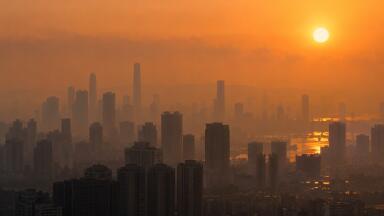
The World Health Organisation recently released another instalment in its popular YouTube series, Science in 5, which reiterated the group’s long-held conviction that air pollution is a ‘public health emergency’. It’s only short, but the video covers a lot of ground, placing the problem of air pollution in the urgent context of both the pandemic and the climate crisis.
In 2019, the World Health Organisation published a report into the leading causes of death worldwide. One of its most troubling statistics shows that more than half of all annual deaths are the result of just ten illnesses.
In descending order, the leading causes of death are: ischemic heart disease, which is responsible for 16% of global deaths every year; stroke, which is responsible for 11%; chronic obstructive pulmonary disease, 6%; and lower respiratory infections – the deadliest communicable disease – which causes just over 5% of annual deaths.
In the latest instalment of Science in 5, the World Health Organisation asserts that all of these illnesses can be linked to air pollution. Such an extensive influence may be terrifying, but it promises somewhat miraculous effects if air pollution could be effectively tackled – indeed, the WHO estimate that a shift in levels of air pollution towards those suggested in the Organisation’s guidelines might bring about a reduction in global deaths of 80%.
If addressing air pollution will improve public health in general, then, could this also mitigate the effects of specific illnesses, like SARS-CoV-2?
A meta-analysis conducted early in the pandemic by a group of researchers in the Chinese Republic found that out of 34 studies, there was a pattern of comorbidities for patients with COVID-19 whose outcomes were severe or fatal.
Although the most dangerous comorbidities are those without clear links to air pollution, like hypertension and diabetes, a number of those illnesses highlighted by the World Health Organisation are pulling their weight, too. For instance, cardiovascular diseases, which can be initiated by inhaled pollutants breaching pulmonary arteries and finding their way to the heart, were present in 13% of severely- and fatally-ill patients, and so were respiratory diseases, which were found in 8% of such patients.
There have been big improvements in Europe and North America in the last 20 years.
In cities, less cars and the tackling of congestion, more public transport powered by sustainable, clean energy. In the UK, this is Clean Air Zones.
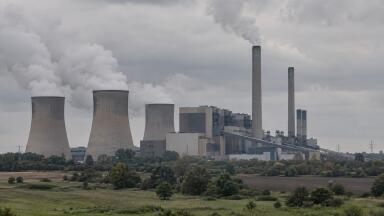
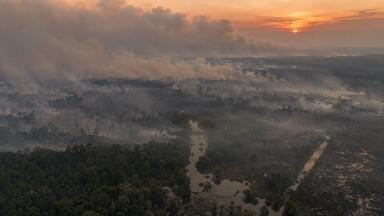
The big thing, though, and why the open letter was addressed to COP26 is that ceasing to burn fossil fuels will help – its effect on air pollution is partly why the WHO thinks that continued climate change will cause 250,000 additional deaths every year between 2030 and 2050.
It is not so much the initial pollutants themselves but their after-effects.
IET 36.5 Sept/Oct 2026



 Product directory



.jpg)

















.jpg)
.jpg)