Industrial emissions
Published over 4 years ago. See the latest and most current information on Industrial emissions.
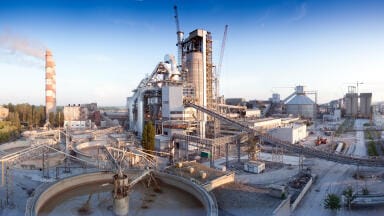
As one of the greenhouse gases with the most concerning global warming potentials (GWPs), it’s imperative that concentrations of methane are monitored at both the point of emission and the atmospheric level. This will not only allow us to determine whether or not a power station, manufacturing plant or other industrial facility is meeting their legal obligations, but also measure the progress of methane mitigation methods over time.
Of course, the fact that methane is a highly flammable gas that is poisonous to humans in high concentrations is another key motivation for implementing robust monitoring measures. But what precise form do these measures take? Here is an introduction to some of the most common (and most effective) monitoring techniques for methane emissions.
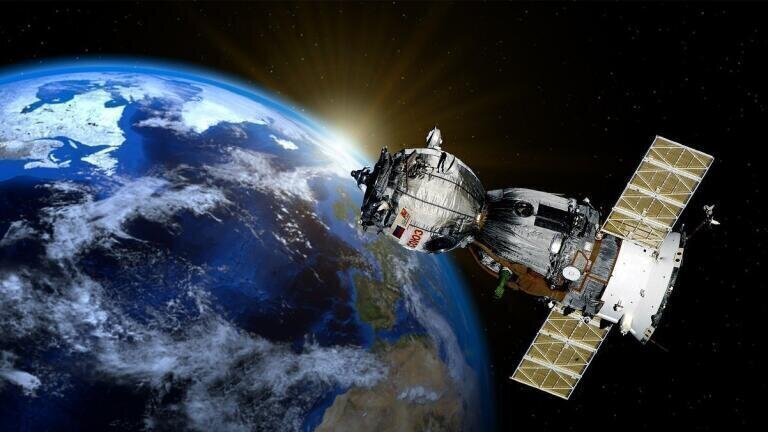
By fitting satellites with advanced sensors and positioning them in a network above the Earth, scientists can gain a comprehensive view of methane emissions across the globe. This is crucial for identifying significant sources of methane, such as oil and gas leaks from energy or petrochemical processing facilities. Recent research mapped out plumes of methane billowing out from such sites all over the world, representing the first time that a study has revealed that kind of global information.
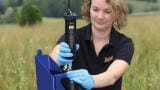
Since some sources of methane emissions have well-defined origin points (such as valves, smokestacks or the suchlike), it’s possible to sample the gases emanating from the source and quantify the level of methane contained within the stream. Calibrated bags collect sample gases over time, with their contents later analysed in a laboratory to give an idea of flow rates and gas concentrations. This technique is favoured at many industrial sites.
Tracer dispersion is a highly popular method of methane monitoring which involves the controlled release of a tracer gas at the point of emission. Concentration measurements are then taken of both the tracer gas and methane downwind in order to monitor the dispersion and development of the latter. This method has been employed at a variety of different methane emission sources, including ruminant animals on agriculture farms and wastewater treatment facilities.
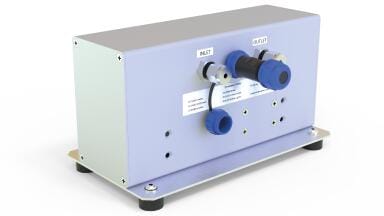
This technique involves the placement of a small chamber – normally measuring one cubic metre or less – atop the source of the emissions. Static chambers measure the fluctuation in methane levels over a specific time period, while dynamic chambers are able to instantaneously and continuously record methane concentrations by comparing the discrepancy between inlet and outlet concentrations (taking into account its flow rate, as well).
A recent innovation in methane monitoring, drones equipped with laser beam sensors can be flown over the area of a suspected methane leak. These shine the laser beam onto the area and capture its reflection. If methane is present, the difference between the light emitted and reflected will indicate the source. This is an excellent method of identifying even very small leaks on pipelines, oil fields or other potential sources of methane emissions.
This is merely a brief introduction to methods of monitoring methane in use today. For a far more in-depth exploration of the topic, interested parties are invited to attend the upcoming Industrial Methane Measurement conference in Rotterdam in the Netherlands this June. Further details can be found at the link above.
IET Guide 2026

 Product directory













.jpg)