Environmental laboratory
Groundwater monitoring
Water/wastewater
Industrial emissions
CEMS
Personal gas detector
Gas sensors
Portable & field testing
Health & safety
Business news
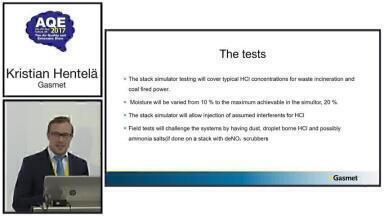
Hydrogen Chloride and Hydrogen Fluoride are among the most important pollutants monitored from waste incineration plants, cement kilns and power plants co-incinerating waste. Due to the reactive na...
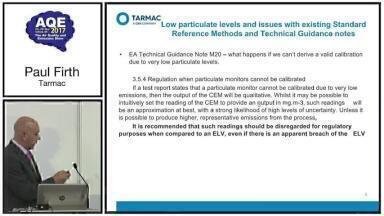
Calibration and measurements of particulte at concentration below 5m/m3 offer signicant challenges not only to process operators and test houses but also regulators. The STA has been working with i...
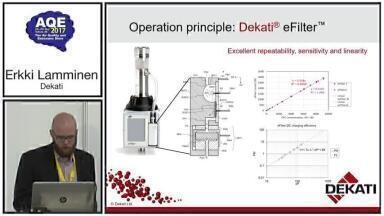
Gravimetric PM mass is a widely used method for determining particulate concentration. Different variations of the gravimetric principle are used as references in standards and legislation. While g...
At present too much emphasis for emission control from vehicles and furnaces is placed on monitoring and cleaning the exhaust gases. This means dealing with large volumes of hot gases at low pressu...
Lord Whitty, President, Environmental Protection UK, will open the Air Quality and Emissions Show and Conference on Wednesday 24 May at the Telford International. Lord Whitty is the opening speaker...
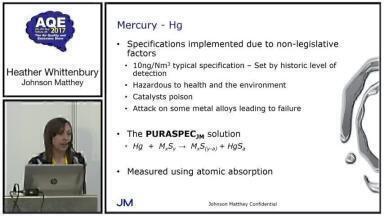
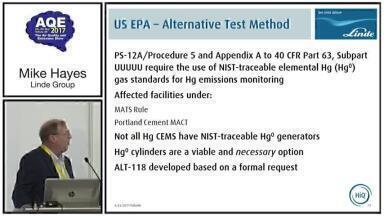
Mercury has been elevated to the status of a pollutant of global concern owing to some of its unique toxic properties which pose environmental and health risks. A chemical element, mercury is found...
Black carbon is a serious problem – but how do we measure it?
Long-term sampling for continuous monitoring of dioxins, furans, PCBs, biogenic CO2 and mercury
Probe sampling under extreme conditions in hazardous areas
Delivering certainty for Section 82 with continuous water quality monitoring
What is the most important aspect of CEMS monitoring?
How Europe's IED 2.0 could change India's CEMS structure
IET Guide 2026
Discover the latest news and research

 Product directory



.jpg)








.jpg)
.jpg)
.jpg)
.jpg)



.jpg)

.jpg)
