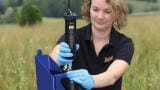
The measurement of compounds in air using passive (diffusive) monitoring is widely recognized especially for long term (averaged) information on air quality. The promulgation of EPA method 325 by the US Environmental Protection Agency (EPA) validates this sampling technique. This method is currently used in the investigation of compounds in air at the fenceline of selected industrial locations.
During development, EPA Method 325 (passive sampling) has been field tested including interlaboratory studies (ILS) for reproducibility over a period of ten (10) years. In addition, the Health and Safety Laboratory in Great Britain has been collecting accurate, reliable results using this sampling technique for decades scientifically validating and developing this sampling approach.
Passive monitoring is an accurate, reliable and easy way to collect air samples over both short and long-term periods, allowing efficient, cost effective characterization of air quality.
This presentation will discuss:

Lee started her career in gas chromatography at Exxon corporate research in 1988. In 1992, Lee began her tenure at PerkinElmer helping her customers with GC and GC/MS support and method development. In her new role, Lee has been a principal field application scientist focused on GC and GC/MS applications for the environmental and petroleum industries developing solutions to improve quality. For environmental, Lee has focused on air, and has developed several patented air monitoring sorbent tube “recipes” which are used today.
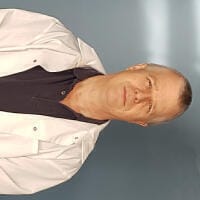
Scientist and hardware enthusiast, Miles Snow works as a principal scientist in the GC business unit with a focus on detection of VOC in gaseous samples. Over the last 29 years at PerkinElmer, Miles has held various positions including Field Scientist, Field Management and R&D. Miles is the author on multiple thermal desorption US and global patents.

Tom has 35 years’ of experience in the petroleum industry, specialising in the delivery of forensic and problem solving /method development capabilities for BP Fuels and Lubricants businesses globally. He was also a member of the BP Science Council representing Analytical Science and led a BP wide Analytical Science network. Tom has published over 30 citable papers, 4 book chapters and has given over 60 presentations at conferences. He is a past Vice President of the Royal Society of Chemistry (RSC) Analytical Division and a past Chairman of the RSC Separation Science Group. In addition, Tom is a recipient of the Silver Jubilee Medal by the Chromatographic Society and a technical achievement award by the Energy Institute.
IET Guide 2026

 Product directory





.jpg)







.jpg)
.jpg)
.jpg)
.jpg)


.jpg)
