Water pollution monitoring
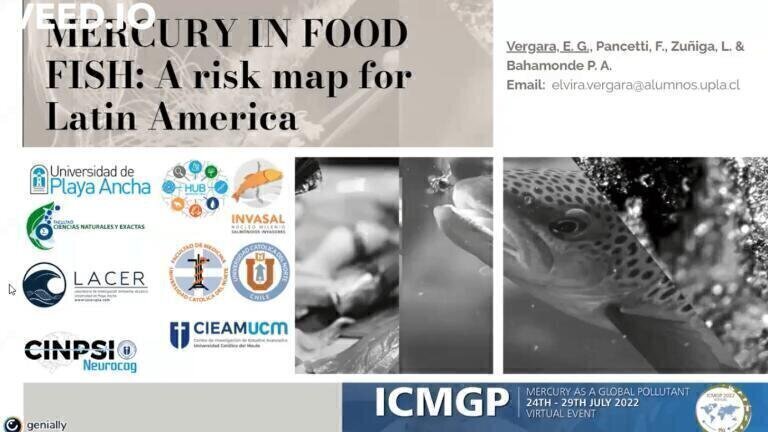
Elvina Vergara, a PhD candidate from Chile, presents an in-depth analysis of mercury concentrations in fish across Latin America.
Mercury contamination in fish is a growing concern worldwide. Particularly in Latin America and the Caribbean, where both fish consumption and mining activities contribute to elevated mercury exposure.
In this lecture, Elvina highlights the risks associated with human consumption and the need for stronger environmental policies.
Methylmercury, the most toxic form of mercury, accumulates in fish through bioaccumulation and biomagnification.
Top predators, such as tuna and sea bass, tend to have the highest mercury levels. This poses a significant health risk to humans who consume them regularly.
High mercury exposure is linked to neurological damage and motor skill impairment. Historical cases such as Minamata disease serving as stark reminders of its dangers.
Latin America is one of the largest contributors to global mercury emissions. This is largely due to its extensive mining industry.
When considering emissions from South America, Central America, and the Caribbean together, the region ranks second globally in mercury pollution.
This contamination directly impacts freshwater and marine ecosystems. It leads to high mercury concentrations in fish species commonly consumed by local populations.
Vergara’s study assessed mercury exposure risk by analyzing fish consumption rates, mercury concentration levels, and human body weight variations across different countries.
The findings revealed that while some species are safe to eat, others contain dangerously high mercury levels; particularly in Brazil, Chile, and Argentina.
The research identified certain species, including tuna, grouper, and sea bass, as having the highest methylmercury concentrations.
In countries like Peru and Venezuela, where fish consumption is particularly high, the risk is compounded. This is not just due to mercury levels but also because of dietary habits.
Even when mercury concentrations in fish are moderate, high consumption rates can still pose a health hazard.
This research sheds light on the pressing issue of mercury contamination in fish and its potential health impacts.
To gain a deeper understanding of the methodology, data analysis, and policy implications, watch the full lecture on demand.
Learn more about which fish species are safest to eat, how mercury affects ecosystems, and what can be done to reduce exposure in high-risk areas.
Don’t miss this essential discussion on safeguarding public health and the environment.
Why not watch some of our other mercury presentations:
IET Guide 2026
 Product directory







.jpg)







.jpg)
.jpg)
.jpg)
.jpg)


.jpg)
