Water/wastewater
Could new technology make real-time water quality assessment simpler, smarter and more scalable?
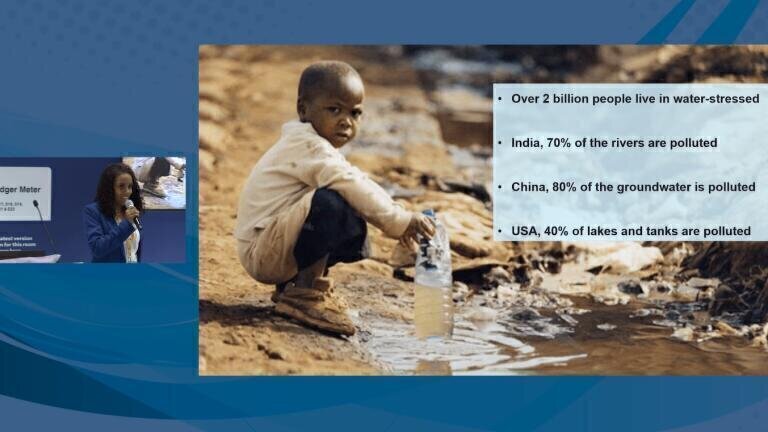
In a world where over two billion people live in water-stressed regions and significant percentages of surface and groundwater in countries like India, China, and the USA remain polluted, the urgency for innovative monitoring solutions has never been clearer.
Catheline Ramsamy, Healthcare Manager at Linxens, recently presented a compelling look at how the company’s sensor platform could transform water quality monitoring.
With existing options like electrochemical probes and photometric sensors presenting limitations in accuracy, cost, ease of use or lifespan, new technology is offering an alternative. It comes in the form of high-performance sensors manufactured using flexible PCBs (printed circuit boards).
These flexible substrates are coated with gold or silver electrodes. Users can customise them for a variety of water parameters including pH, arsenic, chlorine, conductivity, salinity, temperature and even bacteria detection.
The sensors can be configured to single or double-sided and embedded in various environments, even within pipes, enabling decentralised and in-network monitoring capabilities.
This innovation promises not just better sensitivity - like ±0.05 for pH - but the potential to integrate multiple functions onto a single, cost-effective sensor strip.
It's a shift towards smarter, more accessible water monitoring that could dramatically enhance both industrial and public health efforts.
Want to understand the full scope of what this technology can do? Watch the full presentation now by signing into Envirotech Online.
And if water is your focus, don’t miss Aquamate, the exciting new series of global exhibitions focused on water and wastewater monitoring, treatment, and innovation.
From the team behind CEM, Aquamate is the new hub for the future of water.
Find out more at: www.ilmexhibitions.com/aquamate-india.
IET Guide 2026

 Product directory





.jpg)







.jpg)
.jpg)
.jpg)
.jpg)

.jpg)

.jpg)
