Gas sensors
Published over 2 years ago. See the latest and most current information on Gas sensors.
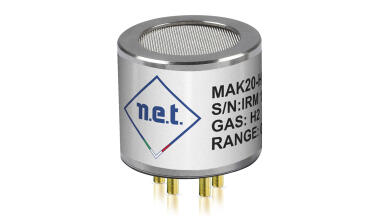
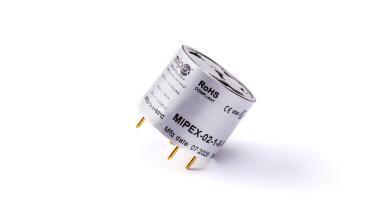
Sensorix is introducing its Long Time (LT) gas sensors with ionic liquids, the Satellix Hydride LT sensors. In this article, you will find key information about ionic liquids and the benefits of using them in gas sensors in contrast to an organic gel electrolyte.
Until now, Sensorix could only offer Satellix hydride sensors with an organic gel electrolyte. These sensors are perfectly suited to selectively detect low concentrations of hydrides with a fast T90. However, their electrolyte contains a high-boiling organic solvent that evaporates very slowly and irreversibly from the sensor.
In most environments, the gel sensors will reach 18 months of operating life as stated in the datasheet. However, evaporation accelerates with increasing temperatures and wind speed. There are environments where organic gel hydrides may not reach their full life expectance. This is often the case if the sensors are installed in ducts or exhausts which are widely used in the semiconductor industry.
“Especially for such applications, sensors with ionic liquids as electrolyte are the perfect solution, as the organic ionic liquid does not evaporate”, explained Andreas König, the General Manager of Sensorix GmbH.
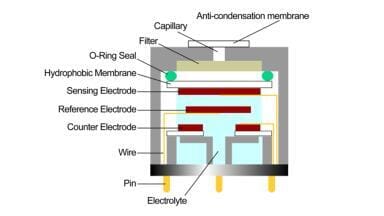
An ionic liquid (IL) is an organic salt that is in its liquid state within a wide range of temperatures, at or below room temperature. Due to their very low vapour pressure and high thermostability, ionic liquids are suitable for use as electrolytes in gas sensors such as Satellix.
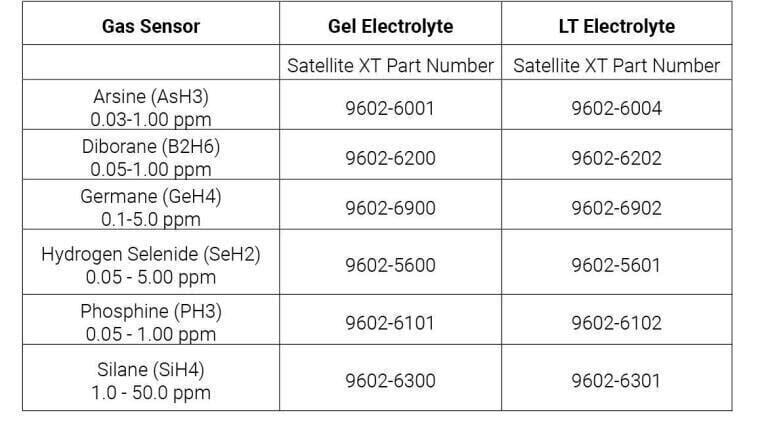
See the table above to view the long-time stable Satellix hydride sensors, available at Sensorix.
While having practically the same performance level as gel sensors in terms of baseline, detection limit, T90 and selectivity, the sensor’s lifetime, even under harsh environmental conditions, is considerably longer and will always reach the 18 months stated in the datasheet.
For detailed technical information, contact our team.
IET Guide 2026

 Product directory