Air sensors
Published over 2 years ago. See the latest and most current information on Air sensors.
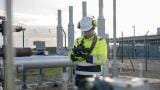
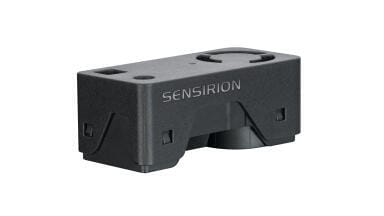
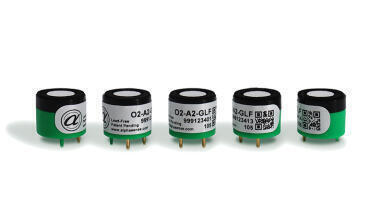
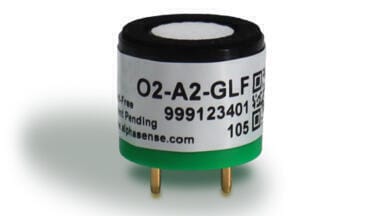
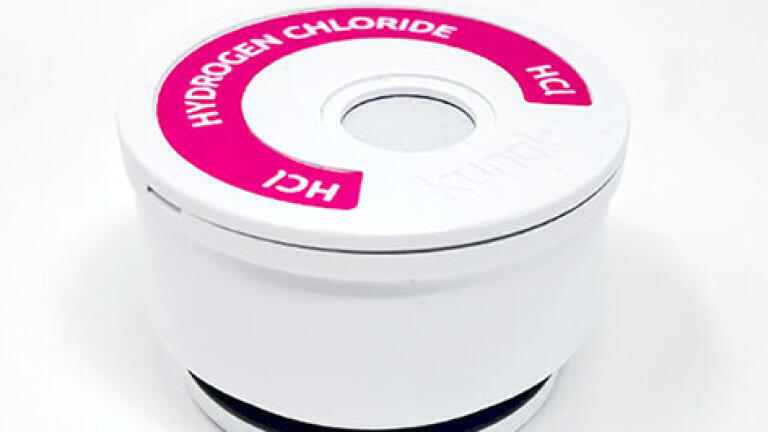
Kunak has introduced a new hydrogen chloride (HCl) cartridge that has an integrated electrochemical sensor capable of monitoring low concentrations (< 1 ppm) up to high concentrations of HCl, with a measurement range from 0 to 20 ppm, and an accuracy level of ±0.3 ppm. The new HCl cartridge has a high cross-sensitivity with hydrogen sulphide (H2S), therefore, one should ideally use an H2S cartridge with the HCl cartridge, to enable the Kunak algorithm to correct this cross-sensitivity. The HCl cartridge is recommended for leakage detection at industrial processes, but not for continuous HCl monitoring.
Hydrogen chloride is a colourless to slightly yellow gas and has a pungent odour. When exposed to the atmosphere, it gives rise to dense and corrosive white vapours. It is found naturally within the digestive systems of most mammals and is produced as a byproduct of several industrial processes. HCl plays a primary role in the synthesis of inorganic and organic chemicals, including chlorine, ethylene dichloride, and methyl chloride It is widely used for a range of applications such as fumigation, electroplating, mining, chemical synthesis, as well as in the manufacturing of synthetic fibres, plastics, dyes, and pesticides.
HCl is a strong irritant and corrosive to any tissue on which it comes into contact. Brief exposure at low levels can cause skin, nose, eyes, throat, and larynx irritations, as well as eye and skin burns. Prolonged exposure can cause severe respiratory failure and even death. Its odour threshold has been set at 0.77 ppm, while the irritant concentration has been reported as 33 ppm.
IET Guide 2026
 Product directory