Environmental laboratory
Published over 5 years ago. See the latest and most current information on Environmental laboratory.
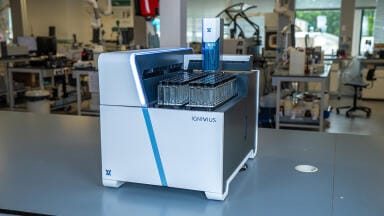
Ionicon recently introduced a revolution in analytical performance: the PTR3. This new generation PTR-TOF enables quantification of volatile organic compounds (VOC) and is optimised for the detection of their oxidation products typically present in the parts-per-quadrillion (ppq) range. The key to ultra-high sensitivities is the novel patent protected 3D tripole reaction chamber where long reaction times are combined with precise control of ion chemistry via electric fields. With the dual-stage core sampling inlet system, which enables analyte transfer with virtually no wall interactions, organics ranging from volatile to even extremely low volatility (ELVOC) can be measured, even at ambient sample inlet temperature. In addition, the PTR3 has the unique ability to detect and quantify RO2 radicals.
Since the invention of the PTR3 principle by Dr. Martin Breitenlechner et al. at the University of Innsbruck, Austria, the instrument was revised and complemented with latest Ionicon technologies. Now outstanding sensitivities of more than 50000 cps/ppbv are achieved e.g. for ketones. Another innovation is the Time-of-Flight (TOF) mass spectrometer itself. Ions are analysed with the novel high-resolution ioniTOF 10K, achieving mass resolving powers of typically 10000 to 15000 m/Δm.
IET 36.5 Sept/Oct 2026


 Product directory




.jpg)