Environmental laboratory
Published over 2 years ago. See the latest and most current information on Environmental laboratory.
Meeting Evolving Environmental Standards
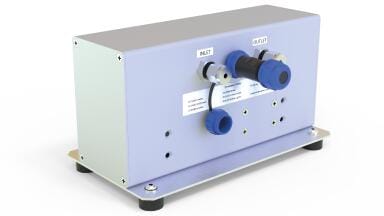
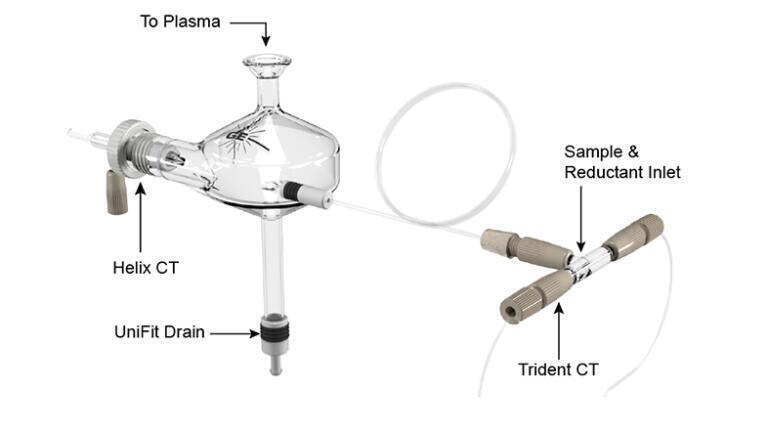
As environmental regulations advance, Glass Expansion meets the challenge with the revolutionary HydraMist Spray Chamber. This cutting-edge technology enables simultaneous analysis of hydride and non-hydride forming elements, exceeding the limitations of traditional ICP methods. Laboratories embracing this innovation can further benefit from enhanced sensitivity, increased productivity, and eliminated system downtime.
A Unifying Solution
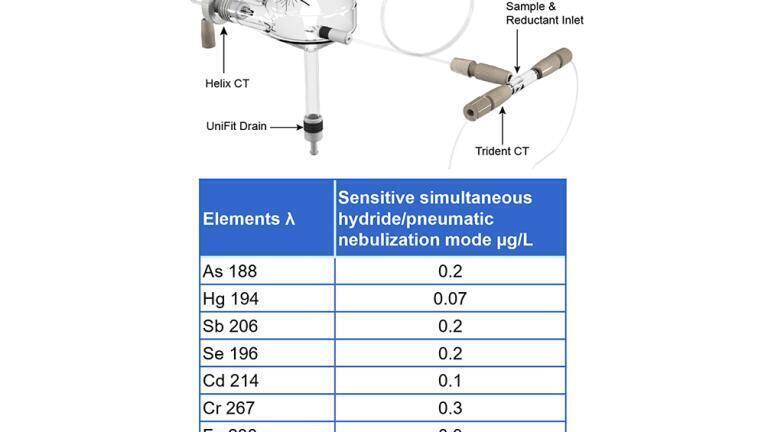
Traditional ICP with pneumatic nebulisation detects hydride-forming elements (As, Sb, Se, and Hg) but is constrained within the μg/L range. Insufficient for many environmental applications, the Cold Vapor technique, requiring dedicated instruments, is often adopted. Glass Expansion's HydraMist disrupts the norm with its advanced design, introducing a secondary inlet port injecting Sodium Borohydride (NaBH4) into the nebuliser aerosol plume, streamlining the Cold Vapor process without mode switching.
Optimal Performance
The HydraMist excels with its unique drain design, swiftly removing waste to prevent hydrogen build-up and preserve analytical precision. The chamber's distinct aerosol/liquid interaction rapidly converts Hg into a volatile form using acidified NaBH4, enhancing sensitivity without compromising precision. In contrast, other systems with slow liquid/liquid mixing compromise detection limits due to incomplete hydride species formation and excess hydrogen accumulation in the drain, leading to low sensitivity and poor precision. These factors contribute to the HydraMist's superior sensitivity and precision, achieving over a 10-fold improvement in ICP sensitivity for cold vapor elements. In Mercury (Hg) analysis, it attains an outstanding 17-fold enhancement in detection limits.
Improved Laboratory Efficiency
Beyond analytical capabilities, the HydraMist elevates laboratory efficiency. By eliminating the need to switch between Cold Vapor and conventional nebulisation modes, it simplifies operations. Its robust construction reduces replacement frequency, minimising operational costs and extending equipment lifespan. The HydraMist's versatility ensures compatibility with various ICP models, offering flexibility for different instrument setups and seamless integration into existing workflows.
IET Guide 2026

 Product directory