Business news
Published over 10 years ago. See the latest and most current information on Business news.
Hillary Clinton has outlined her vision of the United States of America as the new “clean energy superpower” of the world, promising to enter into immediate negotiations with neighbouring countries Mexico and Canada to form a climate change pact in the event she is elected as US President.
Her position has earned her widespread support from environmentalists and liberals – and predictable criticism and contempt from her Republican opponents. In the often bipartisan world of American politics, climate change had appeared to be a rare occurrence of common ground between the parties. However, with almost every single Republican presidential candidate either denying or downplaying the seriousness of climate change in favour of strengthening the US economy, the environment could prove to be a far more divisive (and a result, decisive) issue than previously anticipated.
The former secretary of state has set out a number of different aims she wishes to achieve which would mark out the US as forerunners in the clean energy revolution. She distributed her proposals via two sources - a blog entry on Medium.com and a fact sheet disseminated by her campaign group.
Among other areas, Clinton plans to address the following issues:
Although Clinton has yet to formally set out her view on the controversial practice of hydraulic fracturing (or fracking), it’s thought that any pursuance of environmental conservation on her part must necessarily dispense with the practice.
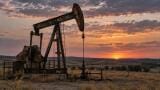
Fracking has helped the US economy immensely in recent years, creating thousands of jobs and driving down oil and gas prices, leading to Obama calling it the “bridge fuel” to renewable energies. However, concerns about its safety (in particular, the possibility of harmful chemicals entering local water supplies and its potential causation of earthquake activity) have led to interest in the oil and gas extraction technique cooling recently. So much so, in fact, that Denton, TX – the home of fracking – recently voted to outlaw the practice within the city environs.
Though Clinton’s proposals have generally garnered a warm reception from environmentalists, the director of the Penn State Earth System Science Center Michael Mann was cautious in his praise. Though he said her plans were “very good overall”, he was quick to point out that there is room for interpretation in her stance on fossil fuels.
“Clinton indicates that she is open to the additional leasing of public lands to fossil fuel companies, which – given the cheap nature of those leases – is effectively a subsidy to fossil fuel interests,” explained Mann, acknowledging that Clinton had pledged to enforce a fair deal for citizens. “A fair deal would mean charging fossil fuel companies for the damage that is being done by the additional burning of fossil fuels in the form of climate change and its costly impact,” he went on. “Even the fossil fuel industry estimates that to be least $60 per ton of carbon burned.”
IET 36.5 Sept/Oct 2026





 Product directory